School safety drills play an essential role in developing the skills that students and staff need during an emergency. The more often schools conduct well-planned safety drills, the more prepared participants will be during a real emergency.
Scenario response drills can be practiced at varying levels of intensity, depending on budget, prep time, and participant age and ability. Guidance from safety researchers recommends a mix of drill intensities, tailored to your school’s resources and needs.
SUMMARY
School safety drills and exercises can range from a classroom orientation to a full-scale simulation with law enforcement presence. For more effective safety drills, schools can match drill intensity to the age, developmental level, and readiness of the people practicing it.
Table of Contents
School Safety Drills and Exercises That Vary in Intensity
Researchers from the National Associate of School Psychologists (NASP), the National Association of School Resource Officers (NASRO), and Safe and Sound Schools recommend conducting scenario response training in a series of progressive steps, laying a foundation of low-cost, discussion-based educational activities then building toward more complex, operations-based exercises only as a school’s needs call for it.
Below are nine common drill formats schools can use to practice any scenario, starting with simple exercises and increasing in intensity and complexity.
1. Process and Personnel Introductions
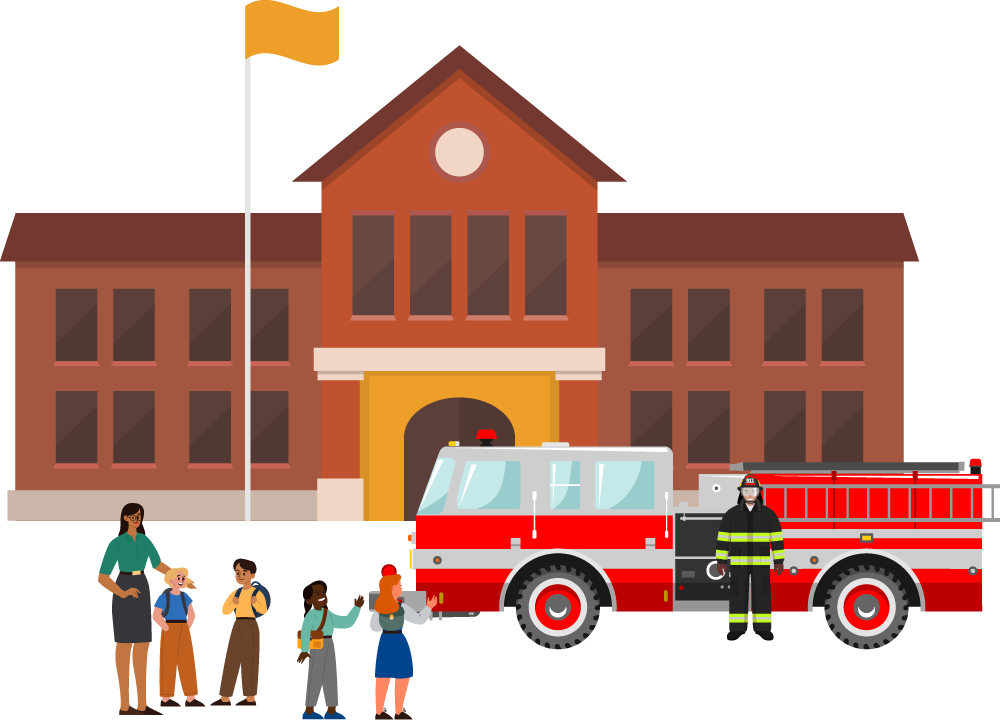
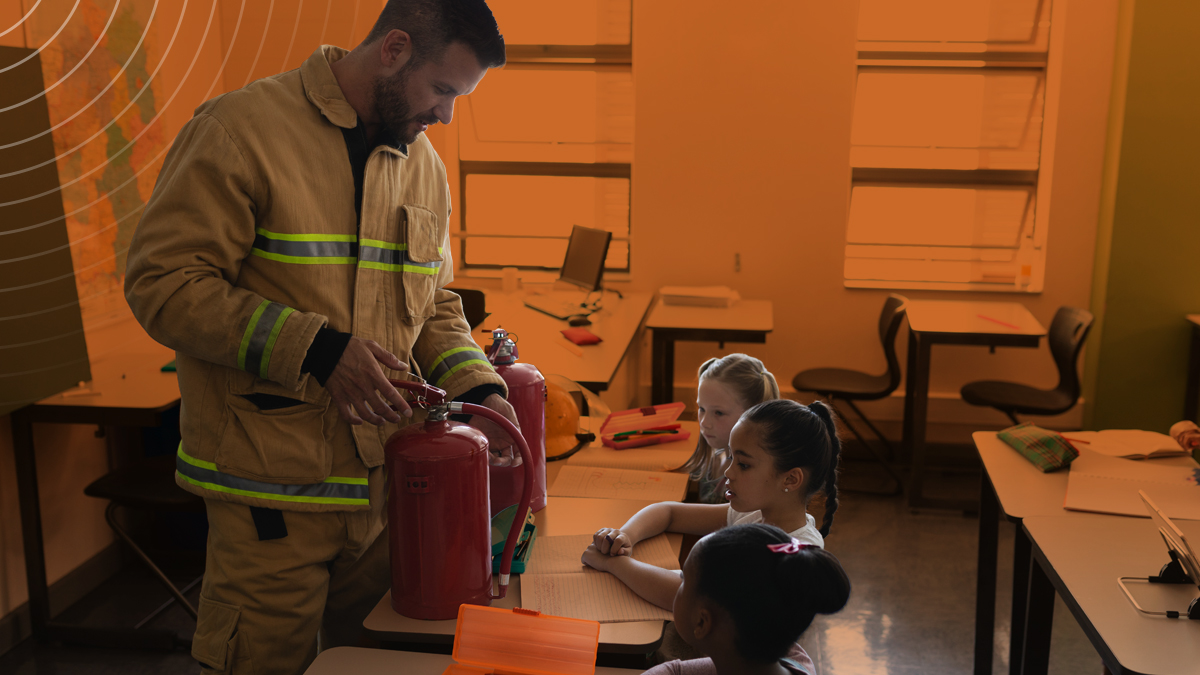
Introductions give students and staff a quick, age-appropriate overview of school safety processes and personnel. This typically includes introducing the school resource officer (SRO), local police or fire department contacts, and other crisis-response partners.
Introductions should be tailored to the needs and abilities of the participants. For example, an introduction exercise for staff likely involves a presentation on safety procedures and contact information for key community partners. For a group of elementary school students, an introduction might be a quick talk by the SRO in the auditorium or during a homeroom period, so the students know who to look for in a crisis.
2. School Safety Orientations
Orientations involve a more in-depth review of a school’s crisis management processes and give students, staff, and first responders the opportunity to familiarize themselves with the layout of the campus, including areas that aren’t usually accessible unless there is an emergency.
The goal is to give everyone a better understanding of
- school layout, which is particularly important for first responders who may need to quickly navigate campus in an emergency
- all approved evacuation routes, some of which may move through areas that aren’t normally open to students, like staff lounges and back hallways
- designated shelter-in-place spaces for tornadoes, hurricanes, etc.
3. Safety Seminars and Workshops
Seminars and workshops use instructional media to teach safety concepts and policies in a calm, factual way. For staff, this is generally conducted through a safety training course completed online or during an in-person workshop with sessions led by district or industry specialists.
For students, these lessons might take place during a special assembly or classroom module, reinforcing the message with instructional media like
- videos
- picture books
- short plays
- songs
This kind of instructional media should be reviewed by a team that includes school mental health staff to keep the safety training age-appropriate. Parents should also be given the option to withdraw their children from any lessons they deem too intense.
4. Discussion-Based Tabletop Exercises
Tabletop exercises put small groups through a hypothetical scenario, with each participant assigned a role to discuss, problem-solve, and report back to the larger group. Discussion-based exercises like this give administrators, staff, and first responders a calm, low-stress environment to
- practice teamwork and problem-solving
- reinforce safety protocols and practices through repetition
- catch gaps in the plan that may not have been apparent on paper
Including first responders and law enforcement in these exercises can further help improve emergency response.
5. Walk-Through Safety Drills
Walk-through safety drills are slowed-down drills that allow staff and students to practice how they would respond to an emergency at a pace that allows questions and discussions. These types of drills give schools a low-stakes way to test the effectiveness of their emergency response protocols and systems.
Slower-paced drills like these are helpful during back-to-school season, when students and staff may need a refresher after summer break. They are also appropriate when running new drills or protocols that haven’t been practiced before.
6. Preannounced Drills
Preannounced safety drills are run in real time, unlike a walk-through drill, but they are announced ahead of time, so everyone knows that a drill is scheduled and that there is no real emergency.
For many types of scenarios, including active assailant and lockdown drills, this is considered best practice to run emotionally safe school drills that don’t introduce unnecessary fear, stress, or trauma to students, staff, and family members.
7. Unannounced Drills
Unannounced safety drills are not discussed with everyone beforehand. However, once the drill is initiated, participants are immediately told it is just a drill and not a real emergency. While certain types of drills, like fire drills, are required to be unannounced by state or district mandate, surprise drills aren’t the best option for every drill—or every school.
Because the element of surprise can be distressing, schools with a recent history of traumatic events may choose to practice preannounced safety drills in place of unannounced drills to avoid creating additional trauma for participants.
8. Simulation Safety Drills
Simulations recreate certain elements of an emergency environment to help participants rehearse under more realistic conditions. This can include
- first responder presence
- multi-sensory alerting throughout campus
- staged sounds or smells
- assigned participant roles (e.g., injured student, concerned parent, etc.)
Tabletop discussions can be helpful tools for preparing staff and first responders for what to expect during a simulation and how to navigate it.
9. Full-Scale, Advanced Simulation Exercises
More intense than a standard simulation, full-scale simulation exercises require collaboration with emergency response teams, district officials, and other community partners. Given their complexity, full-scale exercises require significant preparation, budget allocation, and up to several months to coordinate.
For example, a full-scale reunification simulation, like the Raptor Together Reunification Exercise (T-REx), takes place across two days, involving
- training on The “I Love U Guys” Foundation’s Standard Response Protocol (SRP) and Standard Reunification Method (SRM)
- detailed walk-throughs of how to use the SRP and SRM, with and without technology
- full-scale exercises to practice parent-student reunification
- debriefing sessions on the exercises to review what went well and opportunities for improvement
Due to how intense full-scale simulation drills can be, participants should know about the drills in advance and receive relevant training prior to the exercise. For certain exercises, like an active assailant simulation, it may be necessary to screen staff before participation for mental health safety.
Choosing the Right Drill Intensity for Your Schools
Running the most advanced, expensive, and complicated drill isn’t automatically the safest choice. A stronger approach starts with meeting drill requirements (e.g., quarterly unannounced fire drills or annual lockdown drills) then layering in discussion-based and operations-based practices to strengthen readiness. Most schools can reserve advanced simulations for the staff and responders who need that level of realism.
Good drill management can help reduce the administrative burden of keeping everything compliant and organized. Raptor Drill Manager helps schools
- schedule drills of any type and intensity
- plan for more complicated drills
- track drill compliance by building
- document drill results and after-action review follow up items
See how Raptor can help your school prepare for emergencies with more efficient safety drills.
FAQs
How Often Are Schools Required to Run Safety Drills?
Safety drill frequency depends on state requirements and the type of drill. Some states mandate lockdown drills once a year; others require multiple in a single year. Fire drills are typically required monthly or at least several times per year at elementary schools.
Because requirements vary this much, safety teams should always confirm current state and district mandates directly.
What Is a Tabletop Exercise in School Safety?
A tabletop exercise is a discussion-based drill where a small group (usually staff, although sometimes it can be beneficial to involve first responders) talks through a hypothetical emergency scenario without any physical action.
Participants are typically assigned roles and asked to problem-solve as a group. It is a low-stress way to test decision-making and communication before moving to a physical drill.
Are Active Assailant Drills Traumatic for Students?
Active assailant drills can be traumatic for students and even staff, particularly if the drill is unannounced or hyper realistic (i.e., uses props, actors, or simulated gunfire), which is why it’s not recommended to conduct certain school drills that way.
Lockdown drills that walk calmly through the steps without simulating a real event have a stronger track record of building preparedness without the same risk of distress. Schools are increasingly moving toward announced, age-appropriate formats for this reason.
What Is a School Safety Drill Management System and How Does It Work?
A school drill management system centralizes scheduling, documentation, and compliance tracking for every drill type a school runs. Raptor Drill Manager, for example, allows district safety and administration teams to
- see which drills are due, completed, or overdue across all campuses
- schedule drills of any type to keep up with compliance requirements and safety best practices
- document drill outcomes and opportunities
- assign after-action review responsibilities
- provide drill compliance reports from a single dashboard
Related Resources
See how Drill Manager helped Blue Springs School District track drill compliance for more prepared schools.