After-action reviews provide an open forum for staff and drill participants to ask questions, give feedback, and help identify critical safety gaps. Get practical tips, with insights from The “I Love U Guys” Foundation, on how to conduct better after-action reviews and write after-action reports that improve your school’s readiness.
Why Are After-Action Reviews Important?
Some states, like Florida and Ohio, now mandate after-action reports as part of their school safety requirements, encouraging schools to build a culture of continuous improvement. Even in states without legal requirements, though, conducting after-action reviews and writing after-action reports should be part of your school safety drill checklist.
If schools don’t review what happened during a drill, they miss a valuable opportunity for learning and improvement. “This is all about finding those gaps,” Pat Hamilton, the Alliance Director for The “I Love U Guys” Foundation, explains. “And hopefully they’re small gaps. Then we can put a corrective action in place and fix [them].”
The safety gaps that surface during drills could be staff knowledge, technology capabilities, or facility equipment and infrastructure. After-action reviews help identify those gaps, propose solutions for resolving them, and create a paper trail of accountability that you can reflect back on the next time you run that type of drill.
Conducting Effective After-Action Reviews
You can help your staff succeed when you transform your after-action reviews from a standard debrief to an effective learning tool and open forum for feedback. To do that, consider who should be involved in the review, what topics to cover, and how to plan next steps.
Who attends an after-action review?
It’s considered best practice for school safety drills to involve all appropriate staff, community members, and partners (like law enforcement). This provides the most efficient, realistic practice and helps gather multiple perspectives to assess drill efficacy. The same is true for after-action reviews.
“[After-action reports are] not something we do in a silo,” says Caitlin Warnock, Vice President of Professional Services at Raptor Technologies. “It’s not just district administration. It’s not just campus administration. It’s all of us making the process better and smoother.”
In general, after-action reviews should be attended by:
- Members of the school emergency planning team. This includes safety coordinators, administrators, and other staff involved in developing and maintaining the school’s Emergency Operations Plan (EOP).
- Participants from the drill. This includes the individuals and teams that actually participated in the drill, such as teachers, support staff, and responders from within the school. In some cases, it’s helpful to have a separate debriefing with the students who participated.
- Response team personnel. This includes members of the school’s response teams, such as lockdown response teams, evacuation marshals, and other designated safety roles.
- Community partners and external responders. If community partners (e.g., law enforcement, fire department, EMS) participated in the drill, it’s recommended that they participate in the after-action discussion.
- Leadership and decision-makers. This includes principals, district safety officers, and other admins to help recommend corrective actions that might require administrative support, resources, or policy changes.
By including these different participants in the after-action review, you can collect better, more thorough feedback. It also presents an opportunity for staff to voice any concerns or questions and be a part of the resolution process.
Key topics to address during an after-action review
With so many staff and stakeholders in attendance, it’s important to maximize the efficiency of your after-action review to make the best use of everyone’s time.
We recommend preparing a report or outline beforehand and assigning a facilitator to keep the meeting focused and productive. A critical tool for school drill after-action reports is a drill management system that tracks performance metrics during your drills and can help generate this initial report to guide your discussion.
While the specifics will vary depending on the types of school safety drills and exercises being reviewed and the individual objectives and capabilities of your school, there are some key topics that should be addressed in any after-action review.
- Review the drill objectives. Clear learning objectives should be set during the drill planning phase. Review those objectives at the start of your debriefing to focus the discussion.
- Determine if those objectives were met. This shouldn’t be a yes/no answer, but rather an analysis of how success is measured and which metrics were met.
- Identify what worked. Take some time to look at what went well across categories: procedure, response time, technology, equipment and supplies, etc.
- Identify what didn’t work (and why). Be as thorough as possible when documenting any gaps or weaknesses identified and mark any high-priority gaps, such as a malfunctioning door lock, that should be addressed immediately.
- Open the floor for discussion. This is an opportunity for participants to raise concerns and make suggestions for improvement, by staff and external partners who participated in the drill.
- Set a clear plan for next steps. Ensure a paper trail of accountability by clearly defining next steps and assigning the individuals responsible for writing the after-action report and action plan.
What Is Included in an After-Action Report?
The feedback gathered and notes taken during the safety drill debriefing will become the basis for your after-action report. The Readiness and Emergency Management for Schools (REMS) Technical Assistance Center recommends including the following sections in your report:
- Drill overview. Give specific, identifying details about the drill, including when and where it happened, who participated, what scenario you were drilling, and which software or systems were tested (e.g., a reunification drill would test the capabilities of your reunification software).
- Goals and objectives. Impactful, “no-drama” school drills always have at least one clear learning objective. Name that objective(s) in your report and identify what a successful outcome would look like.
- Evaluation of outcomes. Review and analyze how well goals and objectives were met, using the clear metrics laid out in the prior section and the feedback gathered during the after-action review.
- Evaluation of operations. Review and analyze the capability of your facility and systems, looking at software capacity, adequacy/availability of supplies and equipment, and physical safety gaps.
- Summary. Provide takeaways from the drill and your after-action debriefing, identifying both demonstrated strengths and areas for improvement.
- Recommendations. Suggest ways to address areas for improvement and assign ownership of the tasks with clear objectives and deadlines. This final section of the report will help you avoid common mistakes in school emergency planning going forward and make improvements for the next drill.
Even with a clear outline of what to include, writing an after-action report can be daunting because of the level of detail involved. This after-action plan template from FEMA is a good starting point for building your reports and the REMS Technical Assistance Center provides additional guidance on how to write an after-action report.
If your state or district mandates after-action reporting, be sure to follow any specific requirements for how to format your report and what to include.
Improving School Readiness
From gathering feedback to writing reports and implementing a plan of action, after-action reviews are where school readiness actually improves. This is the important work that helps close safety gaps, builds student and staff confidence, and makes improvements that prepare schools for the next drill and real-world emergencies.
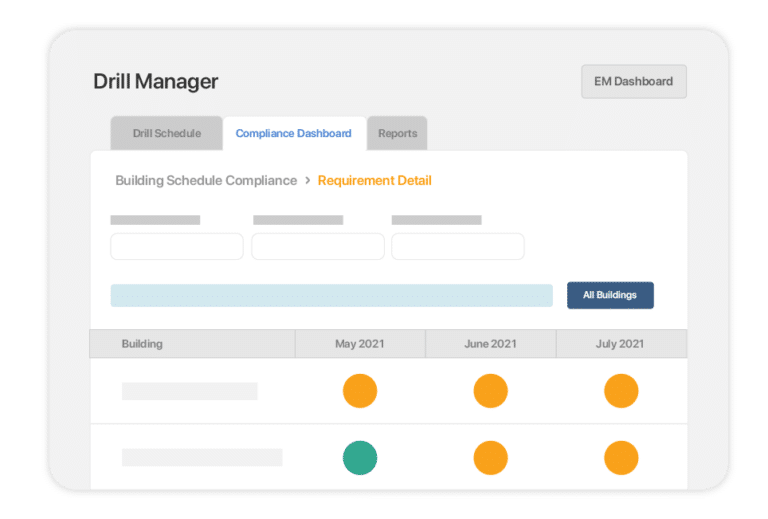
Analyzing performance and identifying weak spots requires access to accurate, integrated data. Raptor Drill Manager puts that data at your fingertips with a customizable, user-friendly dashboard. Capture important information during drills with custom questions and text fields to guide after-action discussions and reporting, all in the same emergency management software where your team plans and manages drills and responds to real events.
See how Raptor Drill Manager can improve your school’s after-action reviews for real readiness.
Related Resources
Learn how Blue Springs School District improved school readiness with Raptor Drill Manager.
Click here to keep reading.