School safety drills aren’t just a compliance check box. They’re opportunities to provide training that builds confidence, supports emotional safety, and prepares staff and students to respond when it matters.
Take a deeper look at why school safety drills matter beyond compliance and how to make your drills impactful, with insights from The “I Love U Guys” Foundation.
Table of Contents
Why School Safety Drills Matter
The conversation around safety drills in schools often begins with questions about compliance:
- What training is mandatory at the state level?
- What’s required at the federal level?
- Are we meeting legal requirements?
- When is the next safety drill due?
While important, answering these questions often generates a lot of work for staff and draws focus away from the primary goal behind running safety drills.
The things that we practice become permanent, which is why drills are opportunities for critical, hands-on safety training. Safety drills help build the muscle memory that staff and students rely on to respond during high stress, high stakes situations.
“Maybe there’s a part of the sequence that you don’t understand of ‘Locks, lights, out of sight.’ Or maybe you’re questioning whether or not your door is going to lock and how to lock that door.” — Pat Hamilton, Alliance Director at The “I Love U Guys” Foundation
Mnemonics like “Locks, lights, out of sight” are easy to remember, but they can be forgotten in the heat of an actual crisis. Drills add the physical practice component that turns flawed memory into muscle memory.
What Meaningful School Safety Drills Look Like
When you move away from a compliance checklist mindset and toward the goal of preparing students and staff for real-world scenarios, the definition of successful safety drills shifts, too.
The foundational component of a meaningful safety training program is a culture of continuous learning and a commitment to the time that requires. And it’s not just the time spent actively running safety drills. It’s all the prep work and debriefing, too, during staff meetings and PD days.
“The secret sauce to running drills is all the work that has to get done before the drill ever happens.” — Pat Hamilton, The “I Love U Guys” Foundation
Administrators can free up staff’s time to do that necessary work by using a drill management tool that can handle compliance tracking and drill scheduling, allowing the team to focus on running effective safety drills and improving outcomes.
Let’s look at some school safety drill best practices for planning and running impactful drills.
1. Drills should build confidence, not trauma
The primary goals of a safety drill should be to
- build staff and student confidence by practicing how to respond in a crisis and
- conduct stress testing to find any gaps in your safety systems, equipment, and processes that need to be addressed
High stress, surprise drills don’t serve either of these goals and can actually create trauma.
The “I Love U Guys” Foundation recommends avoiding drills that rely on high-intensity or overly realistic scenarios, particularly if students are involved. It’s recommended to avoid unannounced drills entirely for the benefit of student and staff mental health.
When a drill becomes too physically and emotionally stressful, students and staff lose their ability to focus and learn. That fear and worry can persist after the drill. In fact, poorly run drills that feel chaotic and frightening, like surprise drills, can actually make students feel more worried about their safety at school.
To run trauma-informed drills that inspire confidence instead of fear, we recommend you
- provide adequate notice to staff and students
- offer modified participation for English Language Learners (ELL), students with limited abilities, and students with prior trauma
- use calm, clear scripts and developmentally appropriate language
2. Drills shouldn’t be a pop quiz
Just as nobody likes pop quizzes, the specific focus of the drill shouldn’t be a surprise, either. If you’re using the Standard Response Protocol (SRP) in your lockdown drill, for example, staff should already be familiar with the SRP. That means administrators should have implemented training before they run a drill.
A drill tests our ability to respond to a crisis, but it shouldn’t be a test that is pass/fail because the goal here isn’t perfection. Instead, it’s continuous improvement.
“‘Practice makes progress’ is a term that I like to use versus ‘practice makes perfect.’” — Pat Hamilton, The “I Love U Guys” Foundation
Rather than focusing on running a perfect drill, look for opportunities for improvement.
- Where can you make changes to staff training to build that necessary knowledge base?
- How can you streamline processes to make the next drill—or real-life scenario—run more smoothly?
3. Drills should have a clear learning objective
Another early conversation to have when planning your drills should be around the objectives.
- What is the intention for this drill?
- What does success look like?
Sometimes, drill planning means you start simple.
If your staff has lots of practice, you could run multiple scenarios in a single drill. But if you’re just getting started with practice drills, trying to run multiple types of drills at once can quickly become overwhelming.
“You want people to leave feeling confident. And that means really honing in on what is your focus for this drill? What are you really looking for people to walk away feeling?” — Caitlin Warnock, Vice President of Professional Services at Raptor Technologies
Instead of trying to tackle everything at once, set an attainable benchmark for success then build a drill that supports that outcome.
4. Drills should involve law enforcement when appropriate
An effective safety drill lets everyone practice the actual processes laid out in your school emergency operations plan. For example, you would never release an active lockdown over the intercom, so you wouldn’t do that to end a lockdown drill, either. Instead, you would follow the proper procedures of going door-to-door to notify each classroom.
Similarly, administrators need to involve law enforcement and first responders when running drills that would require their presence in real life. The more familiar EMS and law enforcement are with your school’s facilities and procedures, the better the drills will go and the better their risk crisis response will be.
School drills involving law enforcement require preparation and planning well in advance. Notify staff during trainings, inform parents and the community about upcoming law enforcement presence, and include law enforcement and first responder partners during the drill planning phase.
Best practices for coordinating drills with emergency responders include
- establishing regular, ongoing communication with local EMS and law enforcement to build a working relationship
- bringing them in early during drill planning to gain access to their expertise and help identify safety gaps to address during the drill
- standardizing crisis response procedures by adopting the SRP to keep everyone on the same page with processes and terminology
Building a Culture of Training
Meaningful, “no drama” school safety drills rely on so much more than just having the right emergency management system and tools. Safety drills require thoughtful planning, dedication to emotional safety, and a real commitment of time and resources to thorough training.
Training isn’t just a compliance requirement; it’s a culture. When staff and students feel confident, emotionally safe, and clear on what to do, that confidence shows up in every corner of the school.
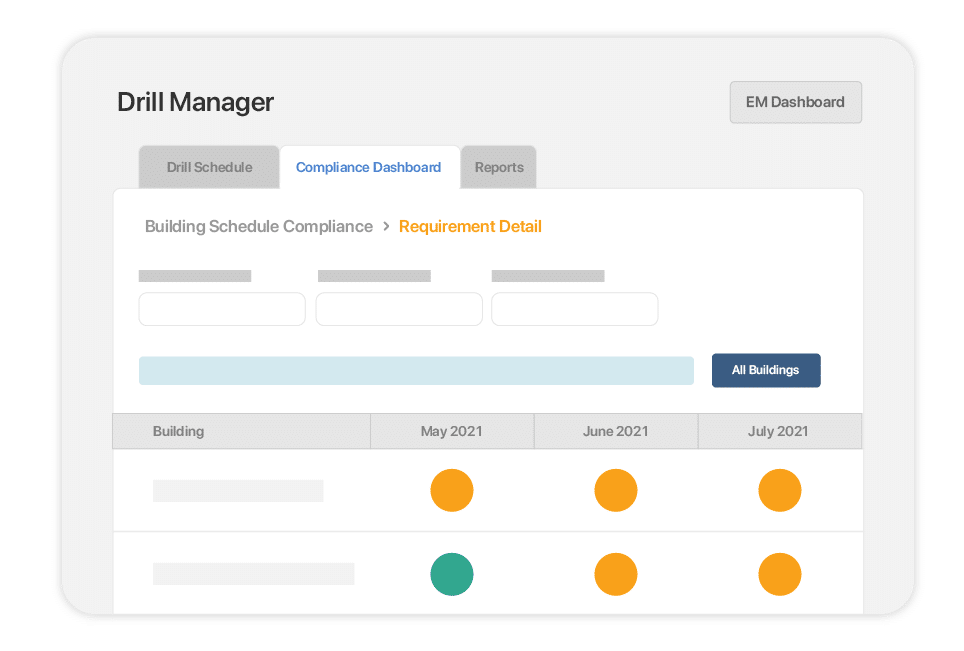
Establishing a culture of training is easier with the right tools. Raptor’s Drill Manager simplifies federal and state-mandated drill compliance and scheduling, letting your staff focus on prepping and running productive safety drills.
Drill Manager also helps build staff confidence through active practice, as it integrates with Raptor Alert and the rest of the school emergency management system, using the same interface and terminology used in a real scenario.
See how Raptor’s Drill Manager can enhance your safety drills and prepare your school for real emergencies.
Related Resources
What is a school drill management system and how does it work? Click here to keep reading.