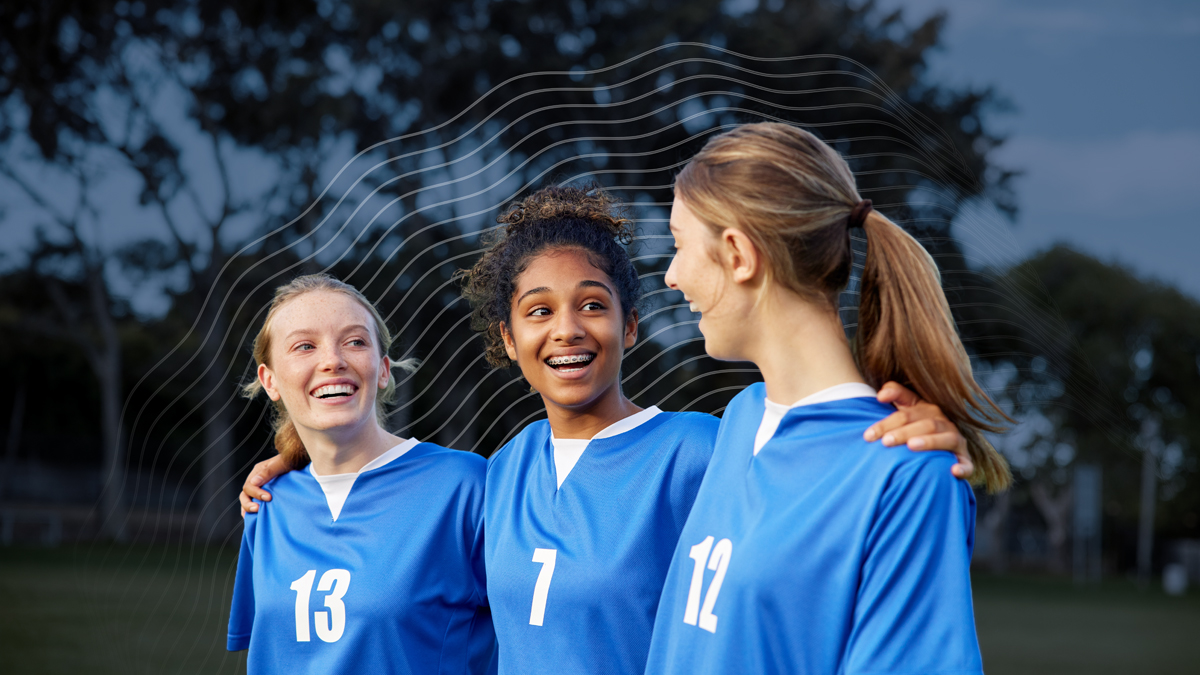
Student-athlete mental health is an often-overlooked aspect of their safety and wellbeing. These teens face the same social and academic challenges as their peers, while also dealing with the additional pressure of athletic competition and performance. The combination puts them at high risk of depression, anxiety, and even suicidal ideation.
To help combat these issues, schools can provide students with healthy frameworks for managing the challenges of school sports and consistent access to mental health support.
Student-athlete mental health struggles can quickly turn into crises if left unaddressed. The schools that effectively support student-athlete wellbeing are the ones that prioritize whole-person wellness over athletic success and make it easy for students to ask for and receive help.
Table of Contents
Understanding Student-Athlete Mental Health Struggles
School athletics usually enhance a student’s experience, especially during middle school and high school. Sports help increase physical fitness, teach self-discipline and perseverance, and build camaraderie and social skills through team-oriented behavior.
But participating in school athletics also comes with a variety of challenges that may negatively impact a student-athlete’s mental health. Understanding these challenges can help schools better support student-athletes when they need it.
The Performance Pressure on Student-Athletes
Students participating in school athletics often face a high level of pressure to perform, including pressure to
- win an important game or break a specific record
- make the junior varsity or varsity team
- earn their teammates’ acceptance or respect
- impress college scouts or win an athletic scholarship
Student-athletes might feel these pressures due to some external force, like a coach, parent, or even their community, or they might place pressure on themselves. Wherever it comes from, the pressure to perform can build over time and compounds with the natural highs and lows of playing any sport.
“[There’s a] dopamine aspect of winning or scoring a shot or scoring a goal,” says Jackson Erdos, American Ninja Warrior competitor, coach, and mental health advocate. “You’re chasing the highs of that at the same time [as you’re] trying to escape the losing aspect. Sometimes it weighs you down, sometimes it lifts you up…It’s a slippery slope.”
The pressure is even greater for high-performing student-athletes. Winning may become their new expected baseline, making anything short of excellence feel like a total failure and keeping them trapped in a high-performance cycle. When coaches use dips in performance as a metric for student mental health and wellbeing, high-performing student-athletes often fall through the cracks and struggle in silence.
The Academic Pressure on Student-Athletes
Student-athletes face many of the same academic pressures as their peers, but with a fraction of the free time to devote to homework and studying.
“[Student-athletes] are the ones that are going to their sports games, having to go do homework till midnight or 1am, and then waking up at 7 a.m. the next day,” says Erdos.
Many schools also have minimum GPA requirements for student-athletes, adding to the pressure. For these students, low grades don’t just have academic consequences. They could mean getting removed from their sports team, letting down their teammates, or losing athletic opportunities in the future.
The Social Sacrifices Student-Athletes Make
School athletics are a significant time commitment on top of an already busy schedule for many students. When faced with the long hours of practice, conditioning, games, and academic demands, student-athletes often make sacrifices in their social lives, missing out on formative experiences like
- friends’ birthday parties
- school dances or fieldtrips
- non-athletic after-school activities
- summer vacation activities (summer camp, travel, etc.)
The feeling that they have no life outside of school and sports can be isolating for many student-athletes, particularly when they see their peers having more “normal” school experiences. If adults ignore or downplay these sacrifices, the feelings of isolation can be even more intense.
“Student-athletes can’t do everything,” says Dr. Amy Grosso, Expert in Residence at Raptor Technologies. “There are only so many hours in a day. And being able to have open conversations with our student-athletes about this [is important].”
How to Support Better Mental Health in Student-Athletes
Schools that want to better support student-athletes on and off the field must commit to a whole-person approach to school athletics that prioritizes wellness and makes asking for help easy.
Value the Whole Person
Student-athletes often have difficulty forming a sense of self outside of athletics. This issue can be compounded when adults in their life reinforce the idea that their sport is central to their identity. Some ways that coaches and staff can demonstrate that they care about their students as people, not just athletes, include
- asking questions about hobbies, interests, plans outside of sport, etc.
- placing less emphasis on winning or personal records (PRs)
- acknowledging the sacrifices students make to participate in athletics
- noticing changes in behavior, not just performance
Coaches should strive to build genuine relationships with their students, showing that they are valued for more than just their athletic ability. Relationship-building also helps coaches spot concerning changes in mood or behavior sooner and gives student-athletes a trusted adult to come to when they need to ask for help.
Model Vulnerability in Sports
Despite the added stresses and pressure they experience, student-athletes are often less likely to seek help than other students. Contributing factors include
- stigma around talking about mental health
- fear of being seen as weak by coaches or teammates
- worry that they might be pulled from the team
- concern that they are a burden to their team or coach
- belief that athletes should be tough and resilient
Mental strength, self-discipline, and fortitude are frequently praised as virtues in sports. While these can be healthy attributes to strive toward, often athletes are given messaging that emphasizes stoicism, “toughing it out,” and self-reliance.
“That’s the exact opposite of what [mental toughness] really is,” says Jackson Erdos. “It’s about being able to learn from your losses; it’s about being vulnerable.”
Athletics staff can help redefine “mental toughness” by teaching students to ask for help and be vulnerable. This includes modeling vulnerability and healthy boundaries themselves and being careful about the roles models they choose to prop up. An athlete that speaks openly about their mental health struggles may be a better role model than someone who performs at the top of their game but consistently demonstrates poor sports-life balance, plays when injured, or struggles with anger issues on the field.
In fact, for student-athletes who are struggling with their own mental health, hearing about it from a respected role model can make all the difference.
“I wish there had been someone, a role model that I could’ve gone to to talk about mental health and understand that I wasn’t alone,” says Erdos.
Provide Consistent Access to Mental Health Support
Even if coaches or athletics staff model appropriate, healthy behaviors, schools cannot assume that student-athletes will automatically know that they can ask for help. There’s a lot of social conditioning and messaging around mental health and sports that schools must combat to create an environment where student-athletes feel safe asking for help whenever and however they need it.
Schools should provide students with
- Explicit messaging that it’s ok to seek support. In plain language, provide student-athletes with reassurance that seeking help is not just acceptable but encouraged. Clearly denounce a “tough it out” mentality.
- Visible messaging about how to reach out for help. Display resources like a crisis text line or phone line number for students in crisis or an anonymous tip reporting line for bullying and hazing incidents.
- Easy access to mental health support services. In and out of season, ensure that students understand which mental health support services they have access to through the school and their community and how to access them.
When staff approach student-athlete mental health with understanding and compassion, reinforced by consistency in messaging and follow-through, student-athletes are less likely to struggle in silence.
Helping Student-Athletes Thrive
Academics, athletics, and adolescence each introduce challenges that impact mental health and emotional wellbeing. Caught in the middle of all of that, it’s natural for student-athletes to struggle sometimes, especially if their school athletics programs are built to prioritize short-term wins rather than their wellbeing.
When schools acknowledge mental health as a critical piece of sports safety, they can better support student-athletes through those struggles and give them the tools to maintain a healthy relationship to their sport for as long as they want to practice it.
FAQs
Does Being a Student-Athlete Affect Your Mental Health?
Yes, being a student-athlete can impact mental health. Some of the impacts are positive, providing many students with a sense of identity, belonging, and personal growth. Other impacts are negative, including
- performance anxiety
- academic struggles
- pressure from coaches or parents
- bullying or hazing from teammates
- withdrawal from other interests outside of sports
- depression, anxiety, or a deep sense of isolation
How Many Student-Athletes Struggle With Mental Health?
Mental health struggles are common for student-athletes, although the exact number of student-athletes struggling with their mental health is unknown, as the data relies on students to self-report. Female student-athletes consistently report higher rates of mental health struggles than male athletes across studies, however, this is likely due to the known gender gap in mental health reporting: Men and boys tend to underreport when they are struggling which correlates to experiencing higher rates of suicide.
How Do Student-Athletes Deal With Stress?
Each individual athlete should manage stress in the ways that work best for them and that are healthy and sustainable, including
- separating self-identity from sporting outcomes
- talking to peers who understand the specific pressure
- breaking overwhelming days up into series of manageable tasks
- seeking professional support early before burning out
Pushing through the stress silently is not a healthy or sustainable coping mechanism. Untreated stress, particularly when it comes from a chronic source like participation in a school sport, tends to compound rather than resolve on its own.
What Are the Symptoms of Anxiety in Athletes?
The symptoms of anxiety in athletes include
- physical and emotional exhaustion
- intense fear of failure or underperformance
- avoidance or decreased confidence
- increased heart rate and rapid or shallow breathing
- trouble sleeping and fatigue
- nausea or stomach issues
- mood swings and behavioral changes
- withdrawal from teammates and family
While some of these symptoms may mimic regular “nerves” before a game, coaches and athletics staff should watch student-athletes for changes over time to determine if the anxiety is persistent and impacting other areas of the athlete’s life.
What Counts as Self-Care for Athletes?
Self-care for athletes goes beyond physical recovery. Athletes should also prioritize making time for things that keep them feeling whole and healthy outside of their sport. Meaningful self-care for athletes includes
- protecting sleep and downtime
- staying connected socially
- doing “ordinary” things, not just athletics
- vocalizing when they’re having a hard day
- knowing when to take a break or step back
Related Resources
Get our Guide to K-12 Student Wellbeing to learn more about how to support students’ mental and emotional health.