Educators and staff rarely have a surplus of time when wrangling students, lesson plans, and interruptions. On top of those daily demands, educators also have to prioritize professional development and training. Sometimes that can make training feel like “checking the box” to meet a mandate rather than learning actionable strategies.
However, when public and private schools prioritize effective violence prevention training to help staff become strong early detection partners, schools can see lower rates of violence and a stronger school community.
A successful K-12 violence prevention training program helps staff build readiness for risk recognition and in-the-moment intervention. Schools have better outcomes when educators understand the need for training and participate in violence prevention training no matter their role.
Table of Contents
1. Prioritize Regular Violence Prevention Training That Meets Your School’s Needs
From bullying to outright fistfights, school staff are on the frontlines of a challenging landscape of student behaviors. Many educators feel a lack of knowledge about how or when they can or should intervene when they see something concerning. Much of that uncertainty can be resolved by district-level training programs that meet state compliance regulations and cover a wide array of topics.
But not every training program is the same, and many educators lack enthusiasm about clicking through yet another online training program. Successful school safety training begins with a breadth of courses designed to meet state mandates and deliver measurable outcomes through scenario- and role-based training.
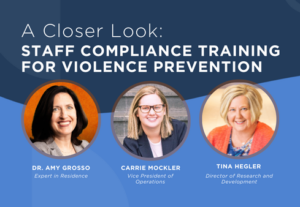
Carrie Mockler, Vice President of Operations at Raptor Technologies explains, “We actually see the greatest impact when districts build a curriculum of trainings rather than relying on just one single course.”
Prioritizing violence prevention training helps districts and schools close common gaps like
- inconsistent responses
- delayed escalation action
- unclear reporting thresholds
- mismatch of role responsibilities
2. Move From “Check-the-Box" Training to Scenario-Based Training
With time being a valuable and limited resource, districts and school administrators feel the pressure to help ensure training meets the needs of their staff and students. Too often, adults are given an online training course that is so generic or simple that they rush through the assignment to hurry and get it done. This “checking the box” action means staff likely breeze through without taking in the information.
The ideal violence prevention training program should include the following:
- scenario-based training for situations at any part of the school day (transition times, on the bus, lunch hours, etc.)
- role-based training that applies to each type of staff in a school (cafeteria, classroom, school bus, etc.)
- a fully developed curriculum throughout the year instead of a one-and-done approach
- clear reporting pathways when staff need to document an incident
- de-escalation techniques and safe intervention practices
- easy access and accountability for all enrolled staff
- local policy and procedure integration to meet regulatory compliance
- clear reporting visibility and dashboards for district admins
With all of these features, a robust violence prevention training program for schools becomes integrated from the top down and for each role. Educators, counselors, bus drivers, and front office staff can all participate in a culture of continuous training that works.
Mockler notes, “Scenario based training…actually plays a critical role because it bridges the gap between book learning and being able to apply those skills under stress.”
The response by a counselor might be different than an educator, but with scenario-based training, they’ll be more prepared to understand their role. “It’s all about building that muscle memory so that the staff have confidence, so they’re able to respond faster, calmer, and with consistency,” says Mockler.
3. Empower Staff to Detect Concerns Earlier With Proper Training
Teachers spend significant time with students and quickly recognize what’s typical for each child. It’s normal for some introverted students to be more comfortable reading a book during lunch, while others expend as much energy as possible.
Mockler tells us, “It’s going to be the educator, your front office staff…maybe the bus driver [who] are your earliest detection mechanism and the first-line support that something’s happening with that kid. They know the typical demeanor of that child.”
Adequate training on early warning signs can empower school staff to know how to intervene or document a concern. “The staff are often the best opportunity to intervene before a situation escalates into a safety concern or an act of violence. And when staff are well trained, they’re able to better recognize those early warning signs and the patterns of escalation and then to know what to do next,” explains Mockler.
Staff can be trained on risk assessment through scenarios and role-playing to watch for, such as:
- sudden shifts in mood or behavior
- escalation in conflict or aggression
- changes in school engagement
- concerning communications or signals
- emotional or physical stress indicators
- boundary testing behaviors
4. Align Compliance Training to District Needs and Real-World Roles
Mandated training can often feel like drudgery to complete, which is why school leaders should convey the importance of a strong training culture and choose a safety and compliance program that engages staff with actionable information.
It should be developed by industry and subject matter experts who research laws and best practices to create the most impactful curriculum for public and private schools. This expertise alleviates the burden on school leaders who are unsure how to train for unique circumstances like students who need accommodations.
Tina Hegner, Director of Research and Development at Raptor Technologies says, “We partner with the safety advisor at a school to make sure that trainings…are aligned with the district-specific challenges that they’re experiencing in that year, in that moment…We’re making sure that we help them meet all those compliance-based needs.”
Comprehensive training improves staff readiness, prevention, and response, building confidence in all staff members who participate in continuous training throughout the year. A diverse training program that’s role- and scenario-based means that training on bullying prevention will “look a little bit different when you’re driving or you’re the bus monitor versus bullying prevention for an educator,” explains Hegner.
That kind of specificity makes all the difference in how much staff engage in violence prevention training and improve the overall school culture of training.
When staff are consistently trained for specific roles and scenarios, they can
- recognize early warning signs
- know what to do in the moment
- adhere to a consistent reporting path
- act with confidence under stress
- protect staff and student safety
When districts and schools invest in meaningful training, staff grow confident, consistent, and prepared to act when concerns arise.
A robust school safety training program like Raptor’s Safety Training and Compliance is essential for schools and districts to improve their staff’s engagement and readiness for various situations they may encounter each day.
Recommended Resource
Bus drivers are frontline staff who need role-based training to recognize warning signs and how to intervene safely. Find out more by reading our guide to transportation safety.