Mandated reporting is one of the most important responsibilities school employees carry, and situations requiring mandatory reporting are often complex. Knowing when and how to report, who to report to, and what next steps are at every stage in the report can help reduce delays in getting support and protecting students in need.
K-12 districts need clear training, consistent procedures, and ongoing reminders that help staff understand both their legal obligations and their role in student safety. With clear guidance on common concerns, all adults interacting with children can better understand the process of mandated reporting.
Mandated reporting of child abuse is a legal obligation for most K-12 school employees, requiring action by reasonable suspicion, not certainty, and failure to report can result in criminal charges, fines, and loss of professional licensure. This resource answers the most common questions school staff have about who must report, what to report, how to file, and what legal protections apply.
Table of Contents
Defining “Mandated Reporter” in a K-12 Setting
1. Who Is a Mandated Reporter?
A mandated reporter is a person legally required to report known or suspected child abuse or neglect to the appropriate authority. In K-12 settings, this often includes teachers, administrators, counselors, nurses, coaches, and other types of school employees.
Mandated reporters are obligated to personally report any instance or suspected instance of
- physical abuse
- sexual abuse
- neglect
- emotional and psychological abuse
- parental substance use
- abandonment
- abuse perpetrated by any custodial or supervising adult
2. Are All School Employees Mandated Reporters?
In many states, yes, all school employees are mandated reporters, while other states list specific roles or employees with direct interactions with children. Some states, like Texas, have universal mandatory reporting, meaning every adult employed at a school is a mandated reporter.
Districts should train all adults who work with students on the requirements in their state.
3. Do School Volunteers Need Mandated Reporter Training?
Sometimes. Whether school volunteers are legally required to complete mandated reporter training depends on the state, the volunteer’s role, and the amount of contact they have with students. For example, certain California K-12 volunteers are designated as mandated reporters by state law. In states with universal mandatory reporting, volunteers are designated as mandated reporters by default.
Even when volunteers are not classified as mandated reporters, it is best practice to require training, especially for adults who coach, chaperone, mentor, or regularly work with students.
What Does Mandatory Reporting Involve?
4. What Warnings Signs Should I Look for as a Mandated Reporter?
The threshold for mandatory reporting in schools and in any setting is reasonable suspicion of abuse or neglect, not certainty. As abuse often goes unwitnessed by other adults and, in many circumstances, students don’t or can’t verbalize the abuse, mandated reporters should know how to recognize common signs that may warrant a report.
One or more of the following signs could support reasonable suspicion that abuse is taking place:
- unexplained or poorly explained injuries or bruising
- noticeable changes in behavior and/or hygiene
- reluctance to go home or be around a certain adult
- drastic changes in mood, academic performance, and sociability
- sexual knowledge or behavior inappropriate for the student’s age
- signs that could indicate exploitation by traffickers, like excessive new gifts
- increase in absences or isolating behavior
- indirect or accidental disclosure by the student
This is a non-exhaustive list of child abuse warning signs, as trauma impacts student behavior in a variety of ways. It is up to the individual mandated reporter’s best discretion when observing potential signs of abuse to determine if they meet the threshold for reasonable suspicion. For staff that are concerned about making that determination, reviewing their legal protections as mandated reporters (discussed in more detail below) can help.
5. Does Mandatary Reporting Include Abuse by Educators or School Staff?
While mandated reporting is often associated with suspected abuse or neglect by a parent or caregiver, educators also have a responsibility to recognize and report concerns involving another educator, school employee, or volunteer. Any suspicion of abuse or misconduct by a school staff member should be taken seriously and reported in accordance with state law.
In addition to making any required report to the appropriate state agency, employees should also understand and follow their district’s policies for reporting concerns involving staff. It is important to understand that notifying a supervisor alone may not fulfill a mandated reporter’s legal obligation. Depending on state law, employees may also be required to make a report directly to the appropriate child protection agency or law enforcement.
6. Should I Report Abuse from Digital Sources Like AI?
Yes, certain types of abuse perpetuated online and in digital spaces do fall under the umbrella of what needs to be reported by mandated reporters. This includes any kind of child sexual abuse materials (CSAM) created or distributed online, even if it was made with AI. In 2024, the U.S. government expanded its legal definition of CSAM to include this kind of AI-generated exploitative content when it depicts an identifiable minor.
7. Do Mandatory Reporting Laws Apply to Abuse That Happens Outside of School?
Yes. A school employee has a duty to report any suspected abuse, neglect, abandonment, or other harm, even if the suspected harm occurred outside of the school. In fact, off-campus abuse and neglect make up the majority of cases.
The threshold for reporting is not that the abuse occurred at school, but only that the reporter observed signs of abuse or had abuse disclosed to them by the child, whether it occurred at home, online, in the community, or in another setting outside of the school.
8. Do I Need to Tell a Parent Before I File a Report?
No, mandated reporters are not required to notify a student’s parents or guardians of suspected abuse before filing a report with the appropriate authorities. In certain cases, disclosing to a parent or guardian could jeopardize an investigation and put the child at further risk. For instance, if the suspected abuser is the parent or guardian or lives in the home, notifying the parent before Child Protective Services (CPS) has a chance to act could endanger the child or allow destruction of evidence.
Additionally, many states follow a direct, immediate reporting model for mandated reporters, meaning that the suspected abuse must be reported as soon as possible, without first consulting supervisors or administrators (typical deadlines are between 24 and 48 hours). Notifying a parent or guardian before filing would delay an immediate report, resulting in potential legal consequences for the mandated reporter and continued risk for the child.
Exact mandates vary by state, but the general guidance is consistent: Reporters should not disclose the abuse to parents before filing a report and should use their discretion in determining whether to notify parents directly at all, taking into consideration the specific circumstances and how best to keep the student as safe as possible.
9. Does Telling My Principal Count as Making a Mandatory Report?
In the majority of states, no, notifying your principal, school counselor, or other supervisory or administrative staff does not legally fulfill the mandatory reporting requirements. Internal reporting may be required by district policy, but mandated reporting is a personal legal duty in many states and cannot be delegated.
Some states do allow for institutional reporting and a handful explicitly require it. For example, Massachusetts General Laws c.119 § 51A allows for mandated reporters to instead notify the “person or designated agent in charge,” thereby shifting their reporting responsibility and the accompanying liability to the institution. This person may or may not be the principal, depending on your school or district’s organizational structure.
The Child Welfare Information Gateway (CWIG) can be a helpful resource for individual staff, however school leaders should also ensure that their staff are informed of state and district requirements to help them understand when they must contact child protective services, law enforcement, or the state reporting hotline directly.
Parents and guardians are essential partners for safe school dismissal, particularly for lower grade levels. If they receive inconsistent or untimely information, dismissal procedures can easily break down.
10. Where Do I File a Report?
Depending on the state and urgency of the situation, mandated reporters should file with their designated state or local child protective services agency, state child abuse reporting hotline, or law enforcement. In cases where immediate danger is present, staff should contact emergency services or law enforcement in addition to filing their report.
Because these hotlines and agencies vary by state, school districts should make reporting instructions clear and easy for staff to find, including
- correct hotline numbers
- online portals
- after-hours processes
- emergency escalation steps
Some states require written reports submitted through specific online portals, others require reports to be made over the phone, while still others require some combination of the two. ChildCare.gov has a helpful resource with state-by-state links to online information and state hotline numbers that mandated reporters can use to verify where and how to file a report of suspected child abuse.
11. What Happens After a Report Is Made?
After a report is made, CPS or the relevant agency will review the information and determine if it meets the state’s criteria for agency response. According to CWIG’s guidance for Making and Screening Reports of Child Abuse and Neglect, state laws and policies address
- how reports are screened
- what criteria determines a need for response
- investigation procedures
- response timeframes
- how investigative findings are classified
If the report qualifies for response, the agency may conduct an investigation or family assessment, contact caregivers, interview the child or others with relevant information, coordinate with law enforcement when needed, and determine whether services or protective action are necessary. As the mandated reporter, you may not receive detailed follow-up as child welfare records are generally confidential, however mandated reporting responsibilities do extend to cooperating with any lawful follow-up requests.
12. What Do I Say to a Child Who Disclosed a Concern That Should Be Reported?
When a student discloses something that may need to be reported, your response as a mandated reporter should focus on safety and reassurance, while avoiding actions that could interfere with a later investigation.
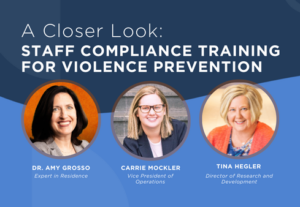
“The most important priority is [the student’s] safety and wellbeing,” says Dr. Amy Grosso, Director, Expert in Residence at Raptor Technologies. “Reassure them that they did the right thing by speaking up, stay calm, and do not try to investigate.”
Mandated reporters have a duty to report knowledge or suspicion of abuse, not to prove that abuse is taking place. In instances where a student discloses a concern, it’s important to avoid “investigative” behaviors like pressuring the child for additional details, looking for proof, or asking leading questions.
“At the same time, never promise to keep the information a secret,” Dr. Grosso explains. “Instead, be honest that you may need to share it with people whose job is to help keep them safe.”
13. What Happens When a Mandated Reporter Fails to Report?
Failure to report child abuse or neglect can result in severe consequences, both legally and professionally. Depending on the state and circumstances, an individual mandated reporter may face
- criminal charges
- fines
- jail time
- civil liability
- professional discipline
- loss of credentials
- employment actions
In many states, failure to report is treated as a misdemeanor. Some states impose more severe penalties when the failure contributes to serious bodily injury, death, repeated abuse, or continued harm. Educators and licensed staff may also face professional consequences from their districts, a credentialing body, or a licensing authority.
14. Are Districts Liable for a Failure to Report Child Abuse?
In certain cases, yes, districts can be held liable for failure to report.
School districts and child-serving organizations may face institutional liability when policies, training, supervision, or culture contribute to reporting failures. Courts have allowed claims to proceed in cases where plaintiffs alleged systemic failures to protect students or respond appropriately to warning signs.
An example of a meaningful expansion of district-level accountability comes from Texas. Recent legislation in Texas, effective for the 2025-2026 school year, provides that any district found to be grossly negligent, reckless, or engaging in intentional misconduct in hiring, supervising, or employing a professional school employee may be liable if that employee fails to report suspected abuse. This liability includes removal of governmental immunity for the district in question.
Protections for K-12 Mandated Reporters
15. What Protections Do Mandated Reporters Have?
Mandated reporters generally receive legal protection when they make a report in good faith. The CWIG explains that immunity statutes protect reporters from civil or criminal liability that could otherwise result from making a child abuse or neglect report.
Good-faith protections do not mean every report will be substantiated or given immunity. They are designed to protect reporters who had reason to believe, based on what they knew at the time, that a child may have been abused or neglected. These protections typically do not apply to knowingly false reports, malicious reports, or conduct outside the scope of the reporting law.
16. Can Mandated Reporters Stay Anonymous?
While mandated reporters often cannot remain anonymous to the agency receiving the report (the agency may need the reporter’s name, contact information, and firsthand observations to address the concern), their identity is typically withheld from the public, the families, and the alleged perpetrators.
Reporter identity is made confidential in many states to protect mandated reporters from retaliation and encourage fear-free reporting.
17. What If I Report a Concern, but the Child Wasn’t Actually at Risk?
Mandated reporters are not expected to prove abuse or neglect before making a report. Their responsibility is to report when the legal threshold is met, which is often defined as reasonable suspicion or cause to believe that abuse or neglect may have occurred.
Most mandated reports that meet that legal threshold fall under good-faith protections. According to the CWIG, every U.S. state and territory currently extends some form of good-faith immunity, meaning that a report does not have to be fully substantiated for the reporter to receive legal protection.
This is why staff training should emphasize that the child protection agency, not the individual school employee, determines whether a report is screened in, investigated, or substantiated.
Mandated Reporting Compliance and Training
18. How Often Does Mandated Reporter Training Need to Be Renewed?
Mandated reporter training renewal requirements vary by state and district. Some states require school employees or other mandated reporters to complete training annually, while others set different timelines or do not specify a renewal period in statute. Some districts may require additional training beyond the state requirements.
Because laws and training rules can change, districts should review their requirements each year and keep documentation showing when staff have completed mandated reporter training.
19. When Do New Hires Need to Complete Mandated Reporter Training?
New hire deadlines for mandated reporter training depend on state law and district policy. In states that set a specific timeframe, employees may need to complete mandated reporter training shortly after employment begins or within the first weeks of the school year.
Even when state law does not specify a deadline, districts should make mandated reporter training part of onboarding.
20. Where Can I Get Approved Mandated Reporter Training?
Many K-12 mandated reporters will be able to access training through their employer. For those who are not provided training through their school or district, information and state-approved training resources can be found on the website of your state’s child welfare agency.
Approved mandated reporter training courses are typically designed to help reporters understand
- their legal obligations
- the definitions and signs of child abuse and neglect
- which groups of children are at higher risk
- appropriate responses to disclosures of abuse and neglect
- when and how to report (specific to your state)
- what happens after reporting
It is the responsibility of district leaders to verify training requirements through their state agency, legal counsel, or other trusted government resources. It can also be helpful to partner with an approved safety training and compliance program that regularly updates course offerings to meet changing state-level requirements.
Helping Staff Act With Clarity When Reporting
Mandated reporting is a serious legal and personal responsibility, which is why questions like these are common. Staff want to make the right decision for their students, their school, and themselves.
Even when state law does not require annual or role-specific mandated reporter training, successful districts often go beyond the minimum legal obligation to help employees understand their role as reporters and everything that entails. By providing training that answers these common mandated reporting questions and more, leaders can build staff confidence and defensibility for their district.
A state-approved safety training program, like Raptor EmployeeSafe, helps districts
- automatically assign required courses by employee role
- keep course content aligned with changing state, federal, and board mandates
- create centralized training records for compliance monitoring and defensibility
See how EmployeeSafe can help give your staff clearer answers and greater confidence in their roles as mandated reporters.
Related Resources
Learn more about how to support students with our Guide to K-12 Student Wellbeing.