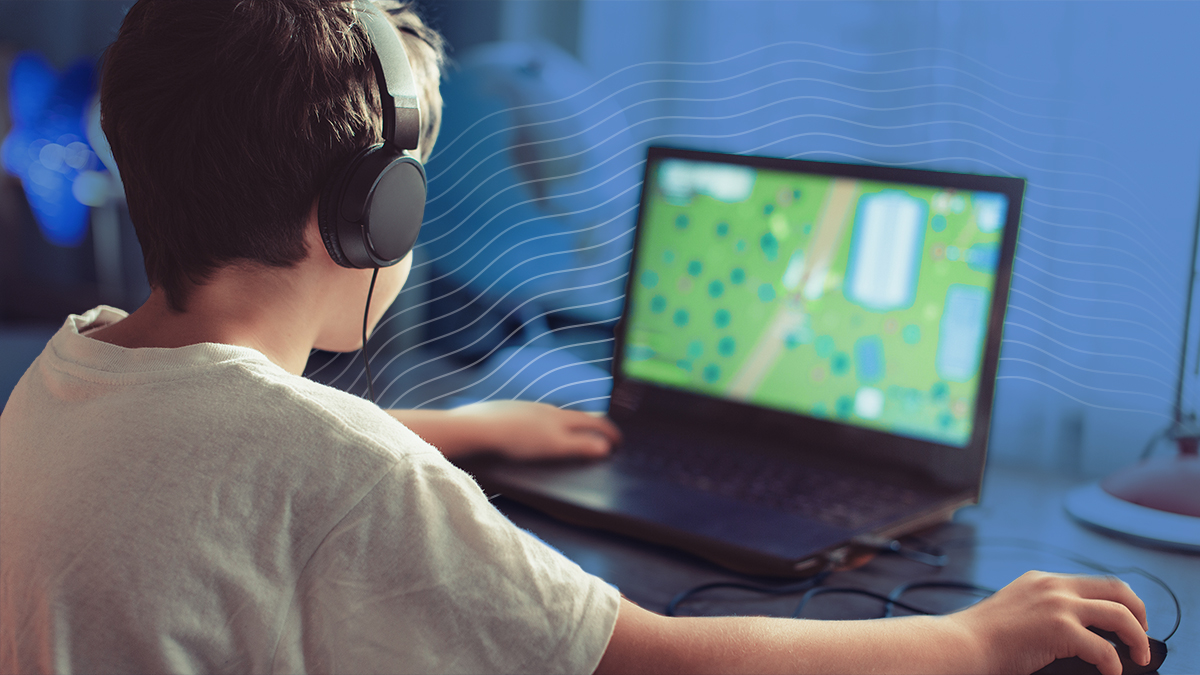
More than 40% of U.S. teens play video games daily, spending large chunks of time on gaming platforms, chatrooms, or communities. Adult supervision is minimal in these spaces and players build anonymous profiles, a combination that makes children vulnerable to grooming and radicalization.
While these activities usually happen at home, children can exhibit behaviors that are early warning signs that school staff can watch out for. To do so, gaining an understanding of the scope of the problem, the dangers these platforms pose, and how students can be targeted or influenced is essential.
SUMMARY
Online gaming platforms and communities combine minimal supervision with anonymous players, putting students in danger of grooming and radicalization. Recognizing how these platforms create the conditions for exploitation and what that exploitation looks like is the first step towards protecting students who game online.
Table of Contents
How Many Students Game Online and Join Online Communities?
Daily internet use among students is at a nearly all-time high, with four in ten U.S. teens “almost constantly” online. This overuse puts students at increased risk for things like cyberbullying and AI misuse, but they’re not just using social media platforms and AI chatbots. Children and teens play online games and engage with unmonitored communities through gaming platforms and forums.
A 2024 survey from Pew Research Center found that the majority of teenagers play video games, with 41% reportedly playing them “at least once a day.” Teens who play video games are also more likely to be active on platforms like Discord and Twitch, where they interact with both friends and anonymous strangers in the gaming community.
This isn’t just a trend for older students. A reported 64% of tweens (ages 8-12) played online video games in 2021, with at least 23% stating that they did so daily.
The Risks Associated With Online Gaming Platforms
Online gaming, particularly excessive gaming, presents a number of risks to student mental health and behavior. For example, at least 41% of teens surveyed in the Pew study think that video games negatively impact the amount of sleep they get every night. Additionally, the majority of teens consider bullying to be a problem in online gaming, with 48% of teen boys reporting that they’ve been called an offensive name at least once.
While cyberbullying and poor sleep are not unique to online gaming, there are some risks that are more closely tied to how these platforms operate. The low adult supervision, high anonymity, and built-in trust inherent to online gaming create the perfect conditions for grooming and radicalization.
Unmonitored Access
Online games create a space to hang out, have fun, and build skills like teamwork and problem solving without direct adult supervision. Children naturally start to seek out more autonomy and privacy as they get older, but this activity prevents guardian visibility into potential harmful interactions and behaviors.
With unmonitored access to children in these spaces, predatory individuals can start to build inappropriate relationships. This might look like
- steering conversations away from the game toward personal questions, favors, or requests
- asking to move the conversation off the game’s group chat into private one-on-one voice calls or direct messages (DMs)
- asking the child to keep their “friendship” secret from parents and teachers
- encouraging the child to talk about people or groups they resent, then steering those conversations toward extremist talking points
Without a parent, guardian, or other trusted adult looking over a child’s shoulder, these interactions can go entirely unnoticed.
Anonymous Interactions
Gaming platforms, forums, and communities are also highly anonymous. Users can play with and talk to a child with no verification of their own age or identity—safely hidden behind a carefully crafted screen name and profile picture. This allows adult-child interactions to persist over a period of weeks, months, or even years, when they would normally be immediately flagged as dangerous or inappropriate if they were happening in person.
Anonymity is built into online gaming communication through private voice chats and disappearing in-game messages, which can embolden bad behavior. For example, the Pew Research Center found that 10% of teen girls who play video games say they’ve been sent “unwanted, sexually explicit things” while playing.
When adults can masquerade as teens by hiding their identity, this type of behavior becomes even more concerning than even peer-to-peer interactions.
Built-in Trust
According to the Pew study, 72% of teens surveyed listed “spending time with others” as one of their top reasons for gaming, with 47% claiming that they had made friends through online gaming. Since online gaming is inherently social and often geared toward cooperative gameplay, opportunities to exploit trust are rampant and conducted subtly through connection.
“There’s a certain level of trust that is built,” says Dr. Will Durgin, Director of Student Wellbeing at Raptor Technologies. “They’re on a team, they need to work together…You have these opportunities to build relationships in a slow, kind of dangerous way by building trust and being able to take advantage of it.”
Patterns of Exploitation: Online Grooming and Radicalization
It’s clear how this structure that manufactures trust between strangers in an anonymous, unsupervised setting puts students at risk for both online grooming and online radicalization. This is not a hypothetical concern, but rather something many behavioral threat assessment teams in schools and government agencies are already monitoring.
In February 2026, the Boston field office of the FBI issued a public warning about violent extremist networks using popular gaming platforms, like Roblox, Minecraft, and Call of Duty, to target children through exploitative and abusive tactics. Motivated by what has been termed as “Nihilistic Violent Extremism” (NVE), these groups aim to coerce children into acts of violence, sexual exploitation, and self-harm.
According to the FBI, NVE tactics typically follow an established pattern:
- Initial contact happens through ordinary gameplay, sometimes with a small incentive like in-game currency thrown in.
- The relationship moves to a more private, less monitored channel.
- The predatory individuals use manipulation and coercion to push victims toward increasingly harmful behavior over time.
- Threats or blackmail are used to keep the child from telling their parents or other trusted adults what’s happening.
While the motivations for these extremist networks might be different than those of an individual groomer or predator, the playbook is remarkably similar, exploiting trust-building gameplay to progress from friendly connection to coercion, control, and threats.
“Grooming patterns, whether it’s for sexual exploitation or radicalization, exist [in these spaces],” says Dr. Penny Schultz, Assistant Director of School Safety and Security at Chesapeake Public Schools. “It’s the unmonitored, uncensored communication. Students think, ‘I know this person, they’re my friend, we’ve been playing for a year.’”
The increase in time children spend in accessible, public spaces online has also created new pathways for groomers to initiate contact.
“Before the height of the internet…I had to be somebody who was radicalizable, with some grievance, something that put me on that path,” explains Will Durgin. “Then I had to find that person who was going to help take me to that level of radicalization…But now, [location] doesn’t matter. Between screen names and different platforms and ways of subverting your identity, you can access so many more people than you could have before.”
Understanding the Risks to Help Keep Students Safer
Unmonitored access, anonymous communication, and trust built on cooperative gameplay can create a space where children are more susceptible to harm and exploitation. Recognizing the risks and understanding the patterns used to influence and target students can help schools
- educate parents and staff on the specific dangers of online gaming platforms and communities
- train staff on how to look for changes in student behavior and provide support
- develop student wellbeing and behavioral threat assessment and management (BTAM) policies to better safeguard student gamers
Putting these policies into practice is easier with a system built to support them. Raptor StudentSafe gives counselors, administrators, and BTAM teams a shared place to document student wellbeing concerns and see chronologies of student behavior over time.
See how StudentSafe can help your school easily see patterns of student behavior for early intervention.
Related Resources
Explore our Guide to K-12 Student Wellbeing to learn more about how to support student mental health and safety.