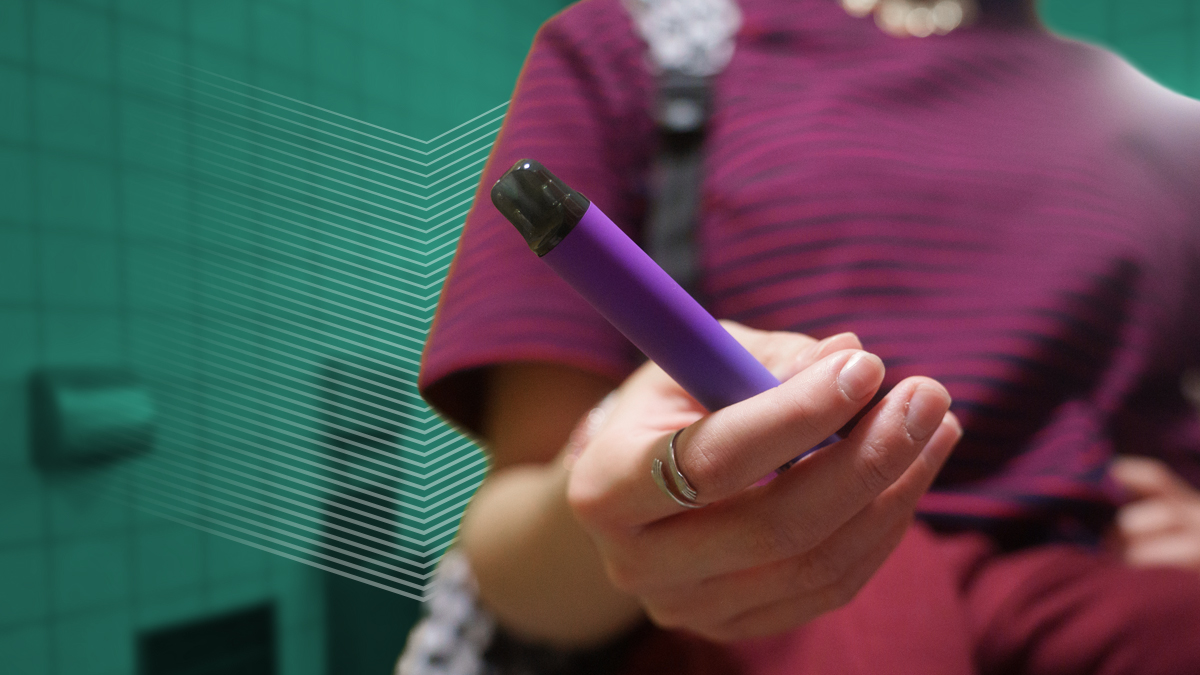
According to a CDC study about students who vape, 38% report “frequent use” and 26% report “daily use.” Due to the portable and habit-forming nature of vape pens and e-cigarettes, much of that use happens during school hours. Students frequently leave class to vape, often in restrooms, locker rooms, and unsupervised areas across campus.
This trend is a challenge for educators, not only because of the health risks of vaping, but also because it can be disruptive to the learning environment and impact instructional time. Addressing student vaping requires a coordinated response across prevention education, supportive services, and the right tools and technology.
SUMMARY
Vaping on campus is disruptive to instructional time and harmful to student health. Effective vaping prevention strategies combine educational and supportive resources for students, staff, and parents with technology that allows schools to identify and prevent vaping incidents.
Table of Contents
Why Do Students Vape?
To effectively combat vaping, schools need to understand why students vape in the first place, even when faced with disciplinary consequences like detention, suspension, or fines.
Research has shown that the most common reasons teens and pre-teens vape include
- Perceived stress relief. Vaping to relax is one of the most common reasons, cited by nearly half of teens who vaped nicotine in the past year and 71% of teens who vape daily or almost daily.
- Flavor appeal. According to the FDA, 87% of youth e-cigarette users report using flavored products, with fruit, candy, mint, and menthol being the most popular.
- Peer influence and social norms. Many students start vaping because they see peers doing it or because it’s glamorized on social media.
Once students begin vaping regularly, nicotine dependence itself often becomes the primary reason they continue vaping, whether they realize it or not.
A national survey using the Hooked on Nicotine Checklist (HONC) criteria found that 80-83% of regular adolescent e-cigarette users showed at least one sign of nicotine dependence. And many teen users report vaping to relieve withdrawal symptoms, which keeps them in the addictive cycle anyway.
Where Are Students Vaping in Schools?
Students often vape in locations around campus that afford privacy or limited supervision, making vaping detection and prevention more difficult. Common vaping hotspots include
- Bathrooms. Bathrooms are the most common locations for vaping due to the privacy provided by stalls.
- Secluded areas. Locations like behind portable buildings, underneath bleachers, or other less-used areas offer concealment and reduce risk of being caught.
Monitoring and preventing vaping in these spaces presents a considerable challenge for school administration and staff. There are often too many potential vaping locations to effectively patrol. The small size and discrete nature of vape pens make them easy for students to hide and harder for staff to confiscate, contributing to the problem.
How to Prevent Students from Vaping in Schools
According to the 2026 School Principals Survey conducted by Raptor Technologies, preventing inappropriate behaviors (like vaping) is the most frequently cited obstacle to managing student movement, with 61% of principals ranking it as their greatest operational challenge.
Effective vaping prevention involves a mix of education, supportive tools, and collaborative action. Schools can adopt the following four strategies to effectively address the issue of student vaping.
1. Education and Prevention Programs
To raise awareness about the dangers of vaping and give students the skills and support they need to avoid or quit vaping, schools can
- provide students with educational resources, such as posters, presentations, and workshops
- encourage open dialogue about vaping risks, leading with empathy instead of judgement
- offer students access to counseling, support groups, and other programs to help them quit vaping
- keep parents informed on what vaping looks like and how to talk to their kids about it
- provide anonymous tip reporting so students can safely report groups vaping around campus
Organizations like the American Lung Association and Truth Initiative offer educational resources that are great for schools, including quit-vaping apps and text message support programs. Programs that help students quit vaping can be more effective than jumping straight to disciplinary measures like detention and suspension because they address the reasons students vape and give them tools to overcome it, rather than simply punishing the behavior.
2. Targeted Staff Training
School staff often take on the role of a trusted adult in students’ lives, and students might be more likely to approach them with a challenge or issue they don’t want to talk about with anyone else—like vaping. When provided with appropriate training, staff will be better prepared for these important conversations.
As part of vaping prevention efforts, staff training should include
- the dangers of nicotine addiction in teens
- the health risks associated with e-cigarettes
- the signs of vaping and how to recognize them
- the available resources for students struggling with vaping
Understanding these topics can help staff speak with confidence and compassion when approached by a student, whether they’re facing social pressure to start vaping or struggling to quit.
3. Vape Detection Technology
Vape detectors are sensor-based devices installed in high-risk areas, like bathrooms and locker rooms, that identify the chemical signatures of vaping and alert staff.
Beyond simply catching students in the act, these devices can also serve as a deterrent. Students are less likely to vape in spaces that they know are monitored. Vape detectors that integrate with mobile alerting systems can be even more effective, sending real-time alerts directly to designated staff members and administrators via their smartphones.
4. Digital Hall Pass Systems
A digital hall pass system lets teachers and administrators monitor student movement on campus, providing better visibility into
- how many times a student has requested a pass
- when a student leaves class and how long they are gone
- where a student’s intended destination is
- which students are frequently out of class at the same time
This data can be used to help identify students that might be vaping on campus. For example, using hall pass history administrators can see which students were in a specific bathroom when a vape detector was activated.
Additionally, a digital hall pass like Raptor SmartPass has meetup prevention, allowing schools to automatically block students from leaving their classrooms at the same time as another student. This feature can be used to prevent unauthorized meetups among students known to vape together.
Better Vaping Prevention in Your Schools
Schools can build effective anti-vaping programs by equipping their staff and students with the tools and strategies they need to succeed, pairing education and training with the right technology, like Raptor SmartPass.
SmartPass is a digital hall pass solution built to help prevent inappropriate behaviors like vaping by providing
- better student visibility
- centralized campus movement data
- automatic meetup prevention
- greater student accountability
See how SmartPass can help prevent vaping in your schools.
Related Resources
Get our Guide to Digital Hall Passes to learn more about safer, more accountable student movement.