School playgrounds provide children with valuable opportunities for physical activity, social interaction, and stress relief. While crucial for development, these spaces can also pose risks if proper safety measures aren’t in place.
By implementing targeted strategies across training, maintenance, layout, and policy, schools can create safer environments that allow students to enjoy play while minimizing accidents, injuries, and liability.
SUMMARY
Playground accidents are more likely to occur on school playgrounds than at public parks or on home play equipment. To help reduce school playground accidents, school leaders can use strategies that help improve staff training, implement safer design layout and accessibility, maintain equipment, and consistently enforce safety policies.
Table of Contents
Why School Playground Safety Matters
Outdoor play breaks are a standard part of every school day for kindergarten and early elementary students—and for good reason. National guidance recommends at least 20 minutes of daily recess, citing the link between regular physical activity and improved academic and social-emotional outcomes.
With so many children using school playground equipment each day, accidents and injuries will happen. In fact, the U.S. Consumer Product Safety Commission (CPSC) reports that 45% of playground injuries on public equipment occur in schools. Minimizing the frequency or severity of those injuries is something schools can work towards to help reduce liability.
Common Playground Hazards
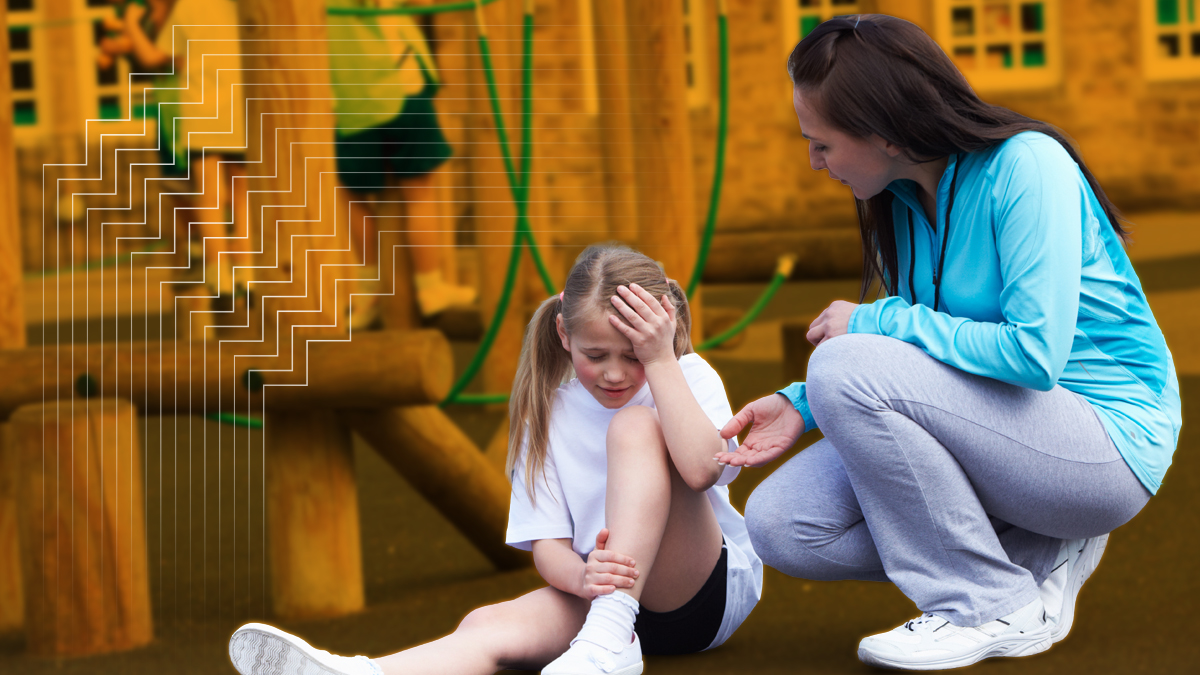
Prioritizing student safety and wellbeing includes protecting students from severe injuries and accidents caused by common playground hazards, like
- Fall hazards. Falls from playground equipment are the most common type of playground injury, accounting for nearly 80% of all public playground injuries, according to the CPSC report.
- Sharp points/edges. Sharp corners and surfaces—as the result of either poor equipment design or broken equipment—can cause cuts or punctures to students, creating additional risk of infection.
- Entanglement risks. Protruding hardware or ropes can cause entanglement and lead to strangulation. The CPSC reports that the majority of these injuries, and even deaths, result from items tied to such protrusions or the child themself, including hoods, clothing drawstrings, jump ropes, shoestrings, and cords.
- Head entrapment. Gaps between equipment platforms, panels, or ladder rungs can cause a child’s head or neck to become trapped during regular play or as the result of a fall, causing severe injury.
- Trip hazards. Debris, uneven or very slick surfaces, and equipment anchors can all present trip hazards for students at play and contribute to an increase in fall-related accidents on school playgrounds.
Key Strategies for Playground Accident Prevention
Unsafe playground conditions like those described above can put students at risk for injury and can expose school districts to legal and financial consequences. School administrators can help reduce playground risks by adopting the following proactive measures.
1. Train Staff on Playground Safety
Playground monitors and teachers are the first line of defense between students and playground injuries. To properly prepare staff for this responsibility, schools can provide role-based staff training that covers
- current playground safety protocols, including active supervision techniques
- how to identify and report playground hazards
- emergency procedures (e.g., how to initiate an alert with a mobile panic button)
2. Provide Adequate Supervision
While children need unstructured, free-play time, supervision is still a key aspect of playground safety. To help prevent playground hazards and unsafe behavior, schools should
- maintain appropriate staff-to-student ratios during recess
- assign supervisors to actively monitor high-risk areas
- instruct students and staff on how to escalate concerns about equipment
3. Perform Regular Playground Inspections
Since some playground hazards can result from broken or poorly maintained equipment, it’s important to regularly inspect school playgrounds for unsafe conditions or new hazards.
This often includes
- daily or weekly visual checks
- more detailed monthly inspections
Checks should look for equipment damage as well as any possible hazards, including things like ropes or clothing looped around or tied to equipment and sharp objects left on the ground or equipment platforms.
To keep track of inspection cadence without increasing administrative burden, many schools choose to use compliance task management software to automate task scheduling, notifications, and completion tracking.
4. Address Playground Hazards Promptly
Keeping a safe school playground environment requires quick action to remove documented hazards and implement repairs. Policies for managing playground maintenance and hazards typically include
- a clearly defined maintenance schedule
- instructions for how to document all repairs
- consistent processes for hazard and near-miss reporting
- manufacturer recommendations for equipment upkeep
- a clear chain of command for who completes which tasks
5. Lay Down Proper Surfacing
Using soft, protective surfacing like rubber mulch or wood chips to cover the ground under and around equipment minimizes the impact of a fall, which are one of the most common types of playground injury.
Surface maintenance is also important. Regularly refilling and fluffing loose-fill materials helps maintain depth and soften impact for students running, jumping, and falling while on the playground. These tasks can easily be added to routine playground maintenance checks.
6. Create Clear Play Zones
Playground accidents like head injuries and collisions are often the result of students participating in multiple different activities in overlapping spaces. For example, a group of students playing tag in front of the swing set could result in someone being kicked or falling off the swing from an unsafe height.
Creating open space for children to engage in active games away from physical equipment like swings, slides, and monkey bars can help reduce this risk.
7. Select Age-Appropriate Equipment
School playgrounds must accommodate students across multiple grades, ages, and developmental stages. Creating an environment that is both safe and engaging for all students can look like
- choosing playground designs intended for use across age groups
- avoiding structures with entrapment risks or steep inclines
- dividing playground areas by age group to encourage safer interactions
- limiting younger students’ access to more advanced equipment, particularly climbing equipment
8. Promote Accessibility
When choosing a safe design and layout for school playgrounds, accessibility is a key consideration. Schools must adhere to ADA standards for accessible paths and equipment.
Not only does this create a more welcoming and inclusive environment for all students, but it can also reduce accident risk for students with limited mobility.
9. Teach Students Playground Safety
Even from a young age, students can be taught how to safely use playground equipment in a way that is developmentally appropriate. Teachers can incorporate playground safety rules into their curriculum or physical education classes.
Social emotional learning (SEL) competencies can also be applied to playground settings, creating consistent behavioral expectations for students whether they’re in the classroom or at recess.
10. Address Playground Bullying
Schools can extend bullying prevention efforts to playground settings by
- educating students on expected behavior at an age-appropriate level
- fostering inclusivity and a sense of belonging for all students at play
- encouraging positive social interactions
- consistently enforcing anti-bullying policies
11. Develop Emergency Plans
Playground accidents still happen, even when schools follow safety best practices. Preparing for playground emergencies in advance can help mitigate the severity of any injuries.
Well-prepared schools often
- equip playground supervisors with emergency communication tools
- stock first aid kits and automated external defibrillators (AEDs) within easy reach
- train staff on how to initiate a medical alert for an injured student
- keep emergency protocols up to date and stored in a central location staff can easily access
12. Implement Standardized Reporting
In the event of a playground accident or injury, incident documentation and reporting are often required for state- or district-level student accident tracking compliance. But a standardized reporting method and centralized system for storing and tracking incident documentation can also help
- streamline accident reporting for swifter, more effective response
- identify improvement opportunities by flagging common maintenance issues, hazards, or accident types
- reduce liability by providing a paper trail proving compliance
Playground Safety Is an Ongoing Commitment
Safety measures significantly reduce risks and foster an environment where children can thrive. By prioritizing inspections, supervision, maintenance, and education, school administrators empower students to enjoy their playgrounds safely while creating peace of mind for parents and staff.
Learn how Raptor EmployeeSafe, powered by PublicSchoolWORKS, can help your school maintain safer playgrounds through compliance, reporting, and training.
Related Resources
See how Wayzata Public Schools streamlined student accident reporting and strengthened risk management.