From slips and falls to chemical spills and accidental injuries, school employees can encounter a variety of safety hazards. Providing targeted post-incident training for staff members when such incidents occur can help districts limit repeat incidents and reduce overall liability by demonstrating due diligence to insurers and regulators. And knowing when post-incident training is appropriate—or required—can help strengthen your district’s overall safety program.
SUMMARY
Untracked or inconsistent staff retraining after safety incidents can leave school districts exposed to repeat injuries, failed insurance claims, or compliance violations. Safety training software like Raptor EmployeeSafe, powered by PublicSchoolWORKS, can help compliance teams assign and document incident-specific retraining for clearer records and safer schools.
Table of Contents
What Is Post-Incident Training for School Employees?
Post-incident training is targeted retraining delivered to an employee or team after a workplace accident, injury, or safety incident. This type of training addresses the specific behavior, hazard, or process that contributed to the initial incident, with the goal of preventing future accidents or incidents like it. Retraining courses are often shorter than annual compliance training or new hire training, usually around five to ten minutes.
In a school setting, safety incidents can look like a slip and fall in the cafeteria or an allergic reaction to an insect sting on the playground. “Sometimes the outcome is going to be retraining,” says Dustin Gehring, Superintendent for Franklin County Community School Corporation, about a recent employee fall. “They shouldn’t have been standing on top of a chair, so you retrain them in Slips, Trips, and Falls.”
Post-incident training typically sits under a district’s broader risk management or workers compensation process and ideally should be automatically assigned once an incident report is filed.
Why Is Retraining Important for School Staff?
Retraining doesn’t take the place of proactive annual compliance training or new hire training, but it still serves several important functions, including
- Refreshing safety protocols for staff. Post-incident training reinforces specific safety procedures or precautions when they’re most relevant, rather than waiting for a scheduled refresher or annual training.
- Risk management for districts. When an incident results in an injury claim or legal inquiry, districts need to be able to show that they took corrective action. Retraining records can help districts demonstrate when and how these measures were taken.
- Documentation for insurance carriers. Training records tied to a specific incident date, employee, and topic can be provided to insurers in the case of a workers compensation claim. “When your insurance company asks, ‘What did you do about it?’ you can say, ‘Well I have this documentation,’” says Gehring.
- Reducing repeat incidents for a safer school environment. Retraining tied directly to an incident’s root cause is an easy, low-cost step toward preventing recurrent incidents of the same nature. This helps create a safer school environment for students and staff while proving proactive safety efforts to risk management and insurance groups.
Types of Incidents That Require Post-Incident Training
Not every incident that happens on campus needs a formal retraining assignment, but certain categories do, either because they carry regulatory expectations or because the risk of recurrence is high without direct intervention.
For example, federal OSHA standards for fall protection build in a retraining requirement whenever “the employer has reason to believe the employee does not have the [required] understanding and skill.” Most districts err on the side of caution and qualify any relevant incidents—like the employee falling from a chair scenario given earlier—as needing required retraining.
The following incident types most commonly need post-incident training due to how often they occur, specific mandates (federal, state, or district), or the potential severity of repeat incidents.
1. Blood Exposure
Any incident involving exposure to human blood or bodily fluids typically requires a review of bloodborne pathogen procedures.
Because these incidents put staff at risk for exposure to certain bloodborne pathogens, it is often helpful to offer immediate refresher training on things like
- the risks of bloodborne pathogens
- proper personal protective equipment (PPE) use
- disposal of contaminated materials, including glove removal
- how to respond to exposure and when to seek post-exposure evaluation
2. Contact With Object(s)
Injuries from equipment, furniture, or tools are common among custodial, maintenance, and cafeteria staff. However, any school staff can make accidental contact with stationary or moving objects during the school day. For example, a distracted teacher rushing through a hallway might collide with a doorframe, or a custodian might get scraped by the jagged edge of a metal shelf while navigating a storage room.
These types of incidents may be due to lack of situational awareness, broken or poorly maintained equipment, or improper use or handling of equipment.
3. Harmful Substance Exposure
Many school staff are at risk of exposure to harmful chemicals or allergens during their daily tasks, from custodial staff to science teachers. Post-incident training after exposure to harmful substances reminds staff about
- proper labeling, storage, and handling methods for preventing exposure
- how to recognize severe reactions, like anaphylaxis, due to allergens or other sensitizers
- what kind of protective equipment is required when working with specific chemicals
- safety protocols for what to do after exposure (remove contaminated clothing, use eyewash station, call poison control for ingested chemicals, etc.)
Exposure to certain chemicals can be potentially deadly. For example, mixing incompatible cleaning products, such as bleach and ammonia-based cleaners, is a well-documented hazard that produces toxic chloramine gas. Because of this, immediate retraining after an exposure incident is critical to help prevent future incidents.
4. Human, Animal, or Insect Bites
There are three categories of biting incidents that may require post-incident retraining for staff.
Human bites
Bites by humans happen more often in early childhood and special education settings, where a student’s behavioral escalation can result in staff injury. Post-incident training for human bites usually centers on
- recognizing early warning signs
- de-escalation techniques and safe redirection
- wound care procedures for bites that break the skin
Animal bites
Custodial and facilities staff may experience an animal bite, most often from rodents encountered during cleaning, pest control, or building maintenance. Public health guidance notes that rodent bites carry very low rabies risk but can transmit other pathogens, such as rat-bite fever, so exposures often warrant medical evaluation rather than a routine first-aid response, making them a higher priority for staff safety and risk management.
Post-incident training after a rodent bite often includes
- how to identify and avoid small mammal nests (rats, mice, etc.)
- how to report the incident
- when to seek medical attention
Insect bites/stings
Staff supervising recess, playgrounds, outdoor events, or landscaping work are commonly exposed to insect stings and bites. The National Institute for Occupational Safety and Health (NIOSH) notes that severe allergic reactions to stings and bites can require immediate emergency care and, in rare cases, can be fatal. Retraining after an insect bite/sting may cover
- how to recognize and avoid stinging/biting insects and arachnids
- what kinds of protective clothing to wear for outdoor activities
- how to recognize the signs of allergic reaction to a bite or sting
5. Muscle Strain or Back Injury
These types of injuries are frequently tied to improper lifting technique or repetitive motions and are common among custodial, cafeteria, and transportation staff who regularly move heavy or awkward loads.
Post-incident retraining after a muscle strain or back injury may cover reducing ergonomic hazards, practicing proper lifting techniques, and using mechanical aids like carts or lift equipment instead of manually lifting.
6. Physical Contact With a Person
Physical contact incidents fall into two distinct categories that call for different retraining approaches.
Accidental
Accidental physical contact with another person—a collision in a crowded hallway, a playground accident at the swing set, or knocking heads in P.E. class—may point to a lack of situational awareness. Retraining can focus on how to use observational skills during high-traffic periods and situations to avoid future incidents in crowded areas around campus.
Intentional
Often, intentional physical contact incidents are the result of altercations between students that require staff intervention or the use of physical restraint. Sometimes, however, a student may attack a teacher, resulting in intentional and harmful physical contact. Research from the American Psychological Association shows violence and aggression toward teachers has grown in recent years, making this a more common type of incident.
In either case, post-incident training often focuses on
- violence prevention methods
- de-escalation techniques
- restraint protocols
- reporting procedures
Because many states require staff to hold current training before they’re authorized to use physical restraint, these kinds of incidents can provide an opportunity for districts to confirm that authorization is still valid and close any liability gaps.
7. Slips, Trips, and Falls
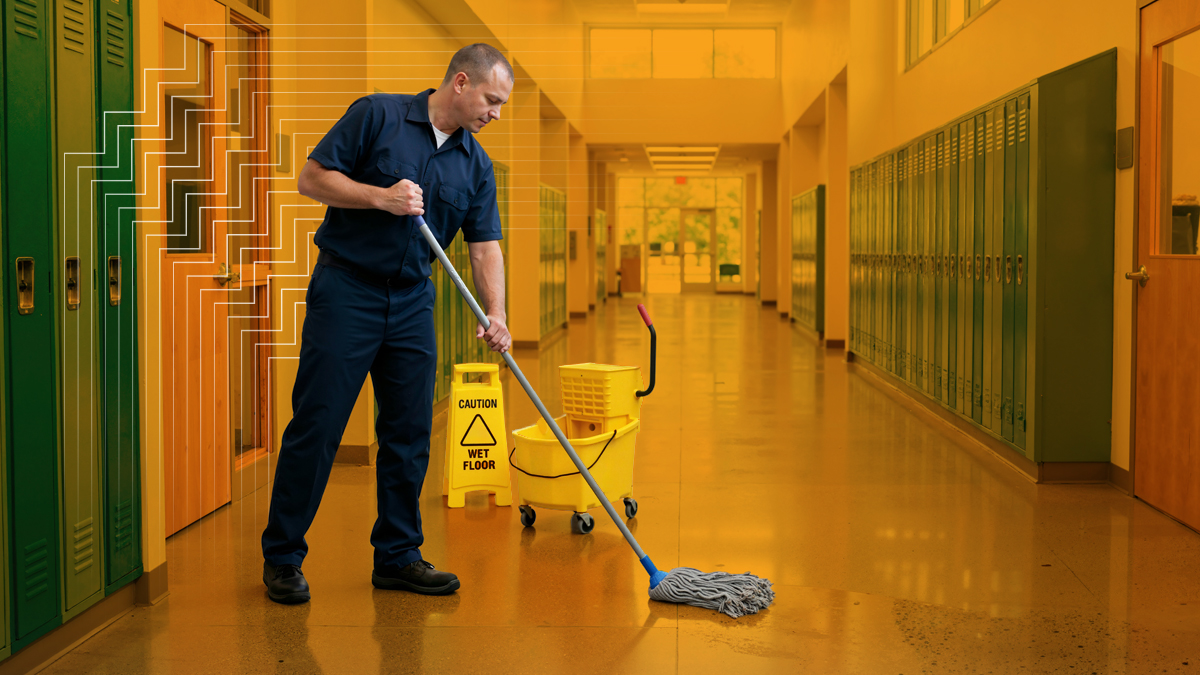
One of the most common incident types in schools, this category covers everything from wet hallway floors to uneven pavement to ladder falls. Retraining after these incidents usually focuses on things like
- clearing spills, cords, and clutter from walkways promptly
- using clear signage when a hazard can’t be fixed right away
- safer methods for navigating hazards like ice and wet floors
- reporting standards for slip, trip, and fall hazards
8. Vehicle Accidents
Incidents involving buses or other district vehicles, including collisions, near-misses, and backing incidents, may call for a defensive driving retraining, including guidance on
- situational awareness
- best practices and rules of the road
- driving during inclement or severe winter weather
Depending on the incident, training more specifically targeted to route, vehicle, or maneuver involved may also be appropriate when managing vehicle accident follow up.
Streamlining Post-Incident Training
Whatever kinds of accidents, injuries, or exposure your staff encounter, post-incident training is a critical next step. To help streamline the process, many districts choose a safety training and compliance system that
- integrates with employee accident reporting
- automatically enrolls staff in relevant post-incident training
- keeps a centralized record of assigned and completed coursework
Raptor EmployeeSafe, powered by PublicSchoolWORKS training and compliance software, helps districts automate post-incident training for better risk management, more defensible documentation, and safer school environments for staff and students.
Recommended Resource
See how EmployeeSafe helped Forest Hills School District save $211,000 in workers comp spending.