School Severe Weather and Natural Disaster Response
It Only Takes One Storm. We Have to be Prepared
Although experts often predict when severe weather will impact our communities, there are times when Mother Nature can surprise us. Creating protocols to keep students and staff safe during various natural hazards should be part of a school district’s EOP.
“With the reunification software, we are able to ensure the safety of our students on campus and consult with our local police department... By using a reunification system that does the quick ID scan, it helps us to ensure we’re releasing students to the people we need to be releasing them to.”

1. Preparing for Severe Weather in Schools
Proactive school emergency preparedness for severe weather starts long before dark clouds form. A well‑written disaster section inside your school emergency operations plan (EOP) clarifies roles, resources, and procedures so every stakeholder knows exactly how to act. Use these steps to strengthen your severe weather school planning and build a culture of continuous readiness.
Write a School Severe Weather Disaster Plan
Your disaster plan nests inside the EOP and details how your campus will prepare for, respond to, and recover from weather‑related incidents. Collaborate with your county emergency management director, state department of education, the National Weather Service (NWS), and the American Red Cross. Tailor procedures to your school and include worst‑case scenarios.
FEATURED RESOURCE
Webinar
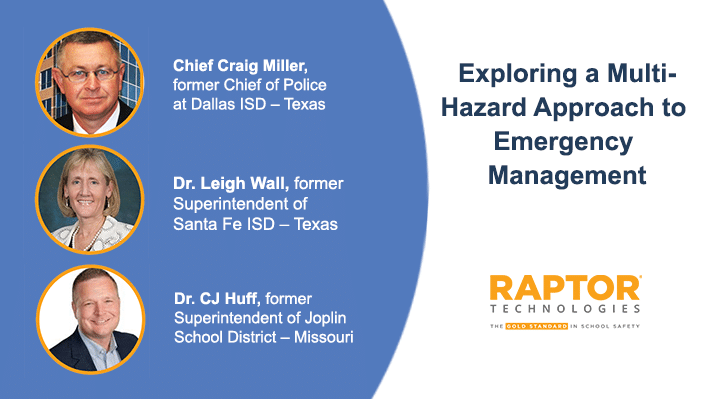
Explore what it means to have a multi-hazard emergency management plan and dig into some of the crucial aspects of developing one for your schools.
Assign a School Disaster Response Coordinator
Designate a qualified staff member—or a small team—who attends local disaster training and owns plan creation with input from administrators, community partners, and first responders.
Determine School Safety Zones for Emergencies
Work with architects, engineers, local fire officials, and county emergency managers to identify safety zones where students, staff, and visitors will shelter. These zones are where school staff, students, and visitors will seek shelter. When determining the zones, think about:
- Travel time – ensure zones are accessible within three minutes
- Size of space – confirm that it can fit everyone assigned and that it’s accessible to individuals with special needs or disabilities
- Safety – make sure that the zone is free of hazards, such as windows, exterior doors, or expansive roofs
- Flood plains and elevation – verify the zone won’t flood
- On the road – consider shelter areas for bus drivers and riders who are on the road
Evacuations can be necessary if your building is no longer safe and/or suffers damage such as loss of power, roof collapse, broken windows, or flooding. Schools should pick a primary evacuation site—and multiple backup options—that can safely house everyone on campus.
Stay Informed: Accessing Real‑Time Weather Alerts for Schools
The quickest way to receive official weather information is via NOAA Weather Radio. If coverage is weak, use the NWS InteractiveNWS mobile or desktop app for text and web alerts that integrate directly into your emergency workflows.
FEATURED RESOURCE
Strategies for Effective K-12 Disaster Preparedness, Response, and Recovery
Responding and recovering from a severe weather event starts with creating a plan to keep everyone safe.

Know When to Activate Your School Emergency Plan
Activate in phases based on hazard type, forecast impact, and timing. A thunderstorm may only require moving students indoors, while a tornado warning requires full activation and relocation to assigned safety zones.
TIP:
Emergency drills in schools matter: Routine drills familiarize staff, students, guardians, and first responders with roles, responsibilities, and safe movement—turning written plans into real‑world muscle memory.
2. Respond and Stay Safe During Severe Weather Events
Every storm, every region, and every school are different. When you find yourself in a severe weather event—or preparing for inclement weather—it’s important to understand when to activate various components of your severe weather plan. The guidance below supports quicker decisions and clear school safety performance metrics during live incidents.
Responses for Specific Severe Weather Scenarios
Below is some guidance to help you determine what steps to take based on common weather events that are typically predictable.
- Tornado, Flash‑Flood, or Severe‑Thunderstorm Watch: Postpone outdoor activities, move occupants from portable classrooms or athletic fields indoors, and monitor alerts.
- Severe Thunderstorm Warning: Complete the steps above and prepare for high winds, hail, and possible flooding.
- Tornado Warning: Immediately activate the full plan, move everyone to lower‑level safety zones, and maintain the tornado‑safe position for at least 45 minutes. Hold classes—even at dismissal time—because students remain safer inside than on the road.
- Hurricane/Tropical‑Storm Watch: Stay ready to escalate if conditions worsen.
- Hurricane Warning: Anticipate hurricane‑force winds and flooding. Close schools and evacuate the area if recommended by emergency officials.
- Winter Storm Watch/Warning: Inspect roads for ice or snow, consult local guidance, and decide whether to cancel, delay, or continue classes.
School Closures and Delays During Severe Weather
It’s important to keep your school community’s safety top of mind when deciding when to cancel, delay, or hold normal classes. These decisions depend on many factors, including but not limited to:
- What meteorologists and regional emergency officials recommend
- How much time you have before the storm hits your school—or if the storm is already active
- The probability of the storm strengthening and what impact the storm will have
- Will students and staff be put in danger if they are released from school
- If students will be exposed to extreme rain, wind, heat, or cold either at school or at bus stops
Staff and Student Emergency Alerting
A campus‑wide panic‑button solution with mobile and wearable options empowers any authorized user to initiate a weather emergency in seconds. The most effective systems integrate natively with digital security devices so that one activation triggers every layer—notifications, strobes, access control, and more.
FEATURED RESOURCE
Raptor Alert Video
Raptor Alert is a silent panic alert system that works on the devices your schools use every day.
At the center of the Raptor Emergency Management Suite is Raptor Alert. Designed to work under duress, Raptor Alert is a silent panic alert system that works on the devices your schools use every day. Raptor Alert expedites and streamlines emergency response by allowing users to initiate an alert directly through 911 and provide critical information to first responders, law enforcement, and campus personnel.
Accounting for Students and Staff in Emergencies
A core component of any emergency response is ensuring everyone is accounted for. Empowering teachers and staff to account for themselves and everyone else on campus—including students, visitors, guardians, and contractors—immediately after an alert goes out and they occupy their assigned safety zone is critical.
Follow Your Emergency Operations Plan
It’s crucial for students, staff, faculty, and first responders to follow the school’s emergency procedures. In a chaotic, stressful emergency, however, staff may forget exactly what steps to take.
Best practice is to have an emergency management solution that allows users like your teachers, staff, first responders, and incident commanders to have quick and easy access to your protocols, maps, and critical documents in one application.
Provide Accurate Information to First Responders and Incident Commanders
Incident commanders and first responders need a clear, real-time line of sight for every person on campus. They need to see details of each individual, including their location, status, medical conditions, and allergies. If they are students, it should also list their guardians’ contact information.
3. After: School Recovery and Reunification
Post‑storm priorities include damage assessment and an efficient student reunification process that keeps guardians informed and students secure.
Assess the Damage
Once safe, walk through your school buildings to look for damage before releasing students and staff from the safety zones. Remember to check school playgrounds, tracks, fields, stadiums, and bleachers for damage.
Announce an “All Clear” message when you determine that students and staff can safely exit the safety zones and return to normal operations.
Reunify Students with Approved Guardians After Natural Disaster
Whether reunification happens on‑site or at an evacuation shelter, swift, accurate release of students to approved guardians prevents confusion and reduces stress. Emergency management software with a dedicated reunification module eliminates paper logs and preserves the real‑time student status data captured during the event.
Knowing student status—including if the student is missing or injured—is critical. This information can easily be lost in the chaos of a reunification that relies on pen-and-paper methods. Best practice is to give teachers, staff, first responders, and incident commanders instant access to real-time student data, status, and location. Ideally, this information is housed in your emergency management software, which you also used to account for everyone during the severe weather event.
An emergency management system with a reunification component can improve the process and eliminate inaccuracy.
FEATURED RESOURCE
Video – Pecos-Barstow-Toyah Independent School District
See how Pecos-Barstow-Toyah ISD utilizes Raptor CSP to streamline emergency management and reunification, ensuring a safer environment for students and staff.
Debrief and Improve Processes with School Safety Performance Metrics
Gather coordinators, safety teams, first responders, staff, and student representatives for a formal debrief. The best assessment requires a method to track data and create comprehensive reports. Use technology‑generated performance reports to identify strengths and gaps—and then update plans, protocols, and training accordingly.
“Safety and security have always been part of my thought process as a district administrator. Ensuring that we’re safe, prepared, and ready for any event at a school is essential. The Raptor CSP training allows us to practice as close to a real event as possible. Raptor’s Reunification workflow is very organized and ensures we get kids back with the right parent. I look forward to practicing reunification every year moving forward.” Brent Jaco, Superintendent of Pecos-Barstow-Toyah ISD
Brent Jaco, Superintendent at Pecos-Barstow-Toyah Independent School District
4. Operating Emergency Shelters in Schools
Schools often serve as community shelters because they are widespread, structurally resilient, and equipped with large gathering spaces.
But operating a shelter and ensuring everyone stays safe can be challenging.
Mental health concerns, like depression and anxiety, can increase in times of disaster, especially considering that many evacuees face hardships like losing loved ones or their belongings to the disaster. Gang activity, drug or alcohol use, and theft are also common safety incidents that shelters must address quickly before the situation escalates.
The shelter needs to be welcoming to the entire community, but it’s also the staff’s responsibility to ensure that dangerous individuals are supervised and/or kept separated from others (like keeping registered sex offenders away from minors).
Verify Identity and Streamline Registration
Require every entrant—including media personnel—to sign in and out. Capture arrival/departure times, full name, contact details, medical considerations, and special needs while ensuring data privacy. A visitor‑management platform accelerates registration, screens entrants against all 50‑state sex‑offender registries, and produces accurate occupancy reports.
Ask certain health questions, like if the person is injured or has lost a loved one in the disaster, to determine if the evacuee should see your mental health support team. Make sure to keep all registrant information secure and protected.
FEATURED RESOURCE
Video – Raptor VisitorSafe
See how Raptor VisitorSafe™ capitalizes on ultra-modern conveniences backed by high-tech security to create new opportunities for schools to welcome their communities with efficiency and peace of mind.
Screen, Approve, and Track Emergency Volunteers
Community members frequently volunteer moments before or after a disaster. Volunteers through the American Red Cross, the most well-known disaster partner, are screened and complete a background check. However, people in your community, like your parents/guardians, may want to volunteer through your school. Many times, they ask immediately before, during, or after the disaster, leaving the school little time to complete a manual screening process.
An automated school volunteer‑management system integrates criminal‑background screening, customizable online applications, hour tracking, and robust reporting—even for virtual volunteers.
The system should:
- Integrate with your visitor management system
- Provide a customizable online volunteer application, including full criminal background checks, volunteer hour tracking, and robust reporting, and
- Help track virtual volunteers—those who are working ‘behind the scenes’ and not physically at the shelter.
An automated school volunteer management system can streamline the application process, track hours, and quickly confirm each volunteer is safe to work with evacuees and keep their personal information secure. The system should integrate with your visitor management system and provide a customizable online volunteer application, full criminal background checks, volunteer hour tracking, and robust reporting. It should even help you track virtual volunteers (those who are working ‘behind the scenes’ and not physically at the shelter.)
Address Safety Issues with a Mobile Panic Button
To help maintain a safe shelter environment, it’s important that everyone is prepared to address and resolve safety issues. Some of the most common issues include:
- Weapons
- Drinking alcohol
- Using or selling illegal drugs
- Theft or damage of personal or shelter property
- Disruptive behavior
- Gang activity
To streamline reporting of safety incidents and to request the right help immediately—from wherever the staff member or volunteer is in the facility—you should leverage a mobile application or wearable panic button. Initiating the button should alert shelter management and security personnel of the incident, so they can respond accurately and promptly before the situation escalates.
Building a Culture of School Emergency Preparedness
Integrated technology, routine emergency drills in schools, and iterative plan refinement weave these strategies into the fabric of daily operations. When school emergency preparedness becomes part of the culture reinforced in staff meetings, professional‑development sessions, and campus signage—everyone knows their role and can act without hesitation.
Strengthening K‑12 disaster preparedness also requires measuring progress. Use school safety performance metrics—drill completion rates, response times, accountability accuracy, and reunification speed—to benchmark success and identify gaps. Share results with leadership, first responders, and community partners to secure support and funding for continuous improvement.
Ultimately, a living school emergency operations plan backed by modern technology turns preparation into resilience. Comprehensive planning, decisive response, and data‑driven recovery safeguard students, staff, and the broader community—whatever the forecast holds today or tomorrow.

Request a Demo
See why Raptor is the leading provider of integrated school safety software solutions
"The safety of our students and staff is our #1 priority and having Raptor gives us that extra sense of security."

"Having an all-in-one solution, like Raptor is the best!"

"I think Raptor offers the best in its class. Nothing beats it."